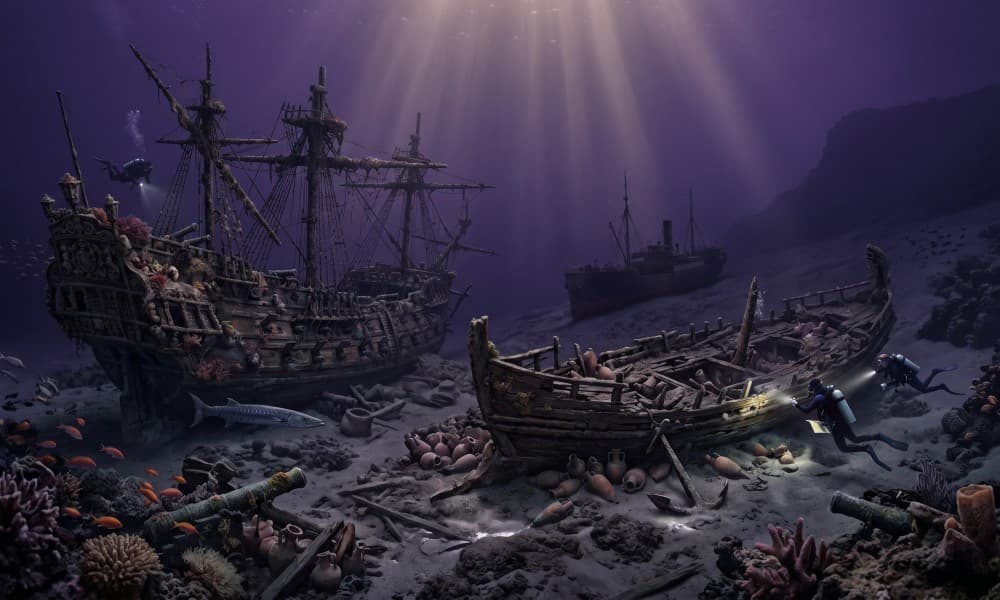
Massive 2,400-Year-Old Ship Graveyard Discovered in the Bay of Gibraltar
Beneath the waves, history never truly disappears.In This News
Quick links to sections in this news.
After discovering over 150 underwater archaeological sites over the course of a three-year study project known as Project Herakles, a group of Spanish archaeologists uncovered a gigantic 2,400-year-old ship graveyard in the Bay of Gibraltar.
Notably, the University of Cádiz and the University of Granada researchers discovered various shipwrecks on the seabed of the Bay of Gibraltar, also referred to as the Bay of Algeciras.
Wrecks dating back to the fifth century B.C., the mediaeval era, and World War II have been unearthed.
Gibraltar Survey Detects 150+ New Shipwrecks
One of the most significant maritime routes in the world, the Strait of Gibraltar connects the Atlantic and Mediterranean seas, and the bay lies near its northernmost point.
Over the ages, several ships, including Roman boats and British and Spanish fleets, have sunk due to the region's notoriously choppy waters.
According to Felipe Cerezo Andreo, a lecturer in archaeology at the University of Cádiz, the scope of the findings greatly surpassed what was previously understood about the area.
There were just four submerged archaeological sites in the region before the start of Project Herakles in 2019. Over 150 locations have been documented by researchers in just three years of effort.
Likewise, Andreo stated that the discoveries were made following considerable historical study, interviews with local fishermen and divers, and the use of advanced marine scanning technologies to detect and map the wrecks.
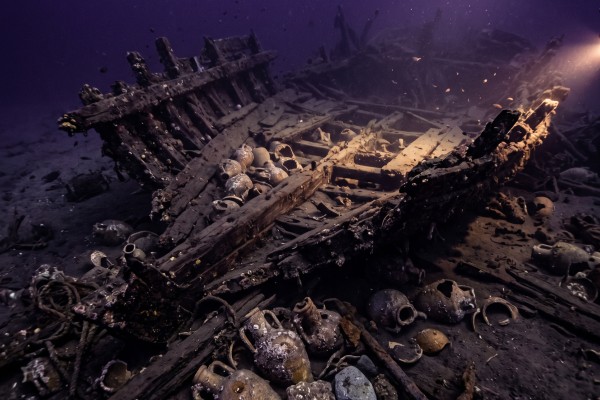
Gibraltar Bay Reveals Shipwrecks Across Eras
Numerous wrecks from the 18th to the 20th centuries were discovered by researchers. Additionally, they found Roman, Phoenician, and Punic ships buried beneath the seabed's sand.
The wreck of the Puente Mayorga IV, a tiny gunboat from the late 18th century that was deployed to combat British ships, was one of the project's most significant findings.
Andreo remarked that the Bay of Gibraltar has been an important maritime zone since antiquity, with settlements like Carteia and Iulia Traducta dependent on the surrounding seas as significant ports.
The bay had served as a “funnel of global history,” he continued, leaving behind a seafloor rich in artefacts from several historical periods.
Besides, researchers produced 360-degree movies and virtual models of the underwater locations to make the findings publicly available. These resources can be found online and are on display at town halls and museums in the area.
Andreo described the wrecks as “museums beneath the sea” and stated that the project's goal was to raise public interest in preserving underwater cultural monuments.
Strait of Gibraltar
Connecting the Atlantic and Mediterranean seas, the Strait of Gibraltar is one of the busiest maritime chokepoints in the world.
The variety of shipwrecks found in the area can be explained by the Bay of Gibraltar's historical importance as a maritime and naval route. Further, Project Herakles identified and mapped underwater archaeological sites using marine scanning technology.
To find wrecks buried beneath the bottom, researchers additionally incorporated information from local fishermen and divers with historical documents.
Regent Centre offers specialised Classroom Training geared to improve individuals' expertise and skills for both professional and personal development. Its curriculum corresponds to industry needs and future goals, promoting growth, confidence, and lasting success.
Read more news:
Posted On: May 14, 2026 at 09:58:41 AM
Last Update: May 14, 2026 at 09:58:41 AM
Articles You Can’t Miss
Handpicked content to fuel your curiosity.


