Looting & Chaos as Europeans Protest Living Costs
Rising inflation and housing crises trigger widespread unrest and clashes across major European cities.In This News
Quick links to sections in this news.
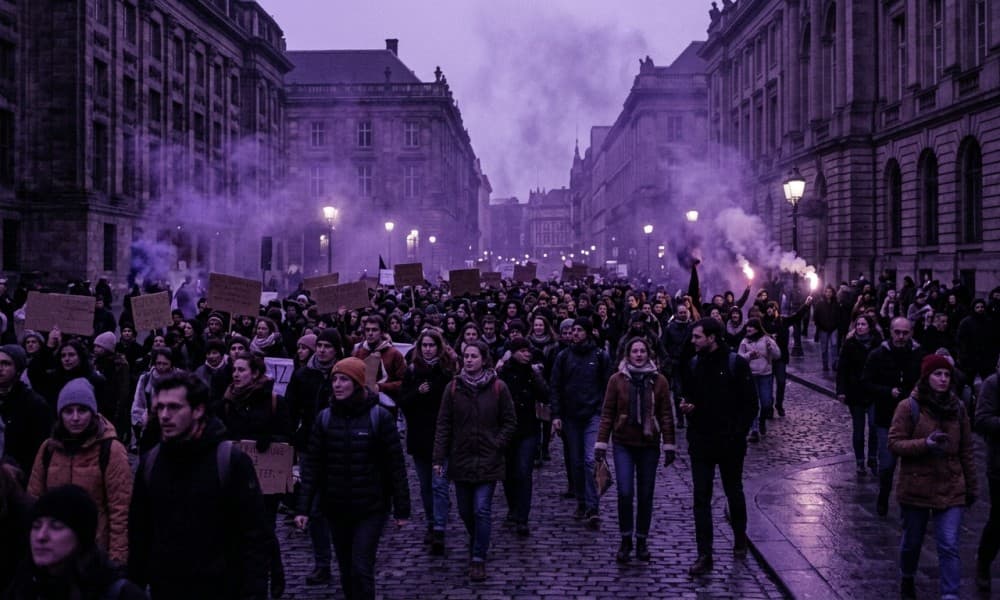
Violent clashes and widespread looting occurred in major European cities over the weekend as hundreds of thousands protested against rising inflation, stagnant wages, and severe housing shortages.
The protests, initially sparked by student rallies concerning education costs, escalated into significant unrest involving trade unions and civic organisations across multiple countries, including France, Belgium, Italy, Portugal, and Albania.
Contributing factors include energy price hikes linked to global conflicts, notably the US-Israeli war with Iran and the Russia-Ukraine war, compounded by underfunded public services, which have intensified widespread discontent among citizens.
France Faces Escalating Unrest & Scrutiny
France saw its most intense protests in years, with over 550,000 participants across the country. Initiated in northern Paris due to school shortages, the demonstrations expanded into a widespread movement reminiscent of the Yellow Vest protests.
Moreover, protesters in high-visibility vests obstructed streets, while violent factions attacked public property and luxury stores in cities like Paris, Marseille, Nice, Lyon, and Limoges, where the historical town hall was set on fire.
Notably, French Prime Minister Sébastien Lecornu reported 1,200 arrests and 150 injured officers after recent unrest, emphasising the situation's severity. Paris Mayor Emmanuel Grégoire noted extensive damage to streets.
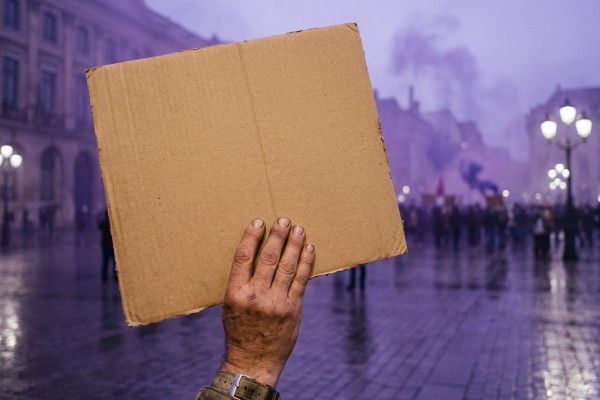
President Macron stated those responsible would face prosecution. The police's tactics are under scrutiny, particularly following an incident where a demonstrator lost a hand from a stun grenade.
The UNSA police union released footage showing crowds attacking police vans, expressing that law enforcement is nearing a breaking point and being overwhelmed by violence across France.
Conflicts Grow in Belgium, Italy, and Albania
In Belgium, student demonstrations against rising education costs escalated into violence in Brussels and Liège, leading police to use water cannons and tear gas. Belgian Interior Minister Bernard Quintin stated that the situation in Brussels exceeded mere protest and vowed to employ all necessary measures to restore order, resulting in 195 arrests across both cities.
Thousands gathered in Northern Italy for anti-war and cost-of-living rallies in cities including Milan and Turin. In Milan, rising inflation at 4.1% and a 49% surge in housing prices since 2018 led to violence, with masked protesters causing damage.
Meanwhile, Prime Minister Giorgia Meloni condemned the violence, while Mayor Giuseppe Sala acknowledged the economic grievances but called the destruction unjustifiable.
In Albania, police clashed with student demonstrators demanding Prime Minister Edi Rama's resignation for a fifth consecutive day.
Housing Crises Fuel Large-Scale Protests in Portugal
In mid-2026, significant protests took place in Lisbon, Porto, and Coimbra, organised by CGTP, Portugal's largest union federation. The demonstrations arose in response to a 16.5% annual increase in house prices and rent costs in Lisbon, which now exceed average monthly salaries by 16%.
Frustration over escalating living costs spurred thousands to participate. Tensions escalated when police dismantled an activist tent encampment in Porto.
In reaction, Parliamentary Affairs Minister Carlos Abreu Amorim expressed that the government would not surrender to public outcry, while protest organisers highlighted a disconnect between governmental leaders and the realities faced by citizens.
A Divided Continent's Political Consequences
These demonstrations, although lacking coordination, are fundamentally linked to increasing living costs and uncertain economic conditions.
Furthermore, a professor specialising in EU law and policy at HEC Paris Business School, Alberto Alemanno, stressed that while France serves as the focal point of this movement, initial expressions of mobilisation are also surfacing in Greece, Germany, and Austria.
Eventually, as national elections approach in Spain, France, Italy, and Poland, Alemanno predicts that these protests and mobilisations will become crucial topics within political discourse. The interconnectedness of these movements could significantly influence electoral conversations and outcomes across Europe.
Regent Training's Online Courses enhance learner performance and career aspirations by developing essential skills. This training platform fosters self-confidence and equips participants with the expertise needed for success in their fields.
Read more news:
Posted On: October 20, 2026 at 01:48:23 PM
Last Update: October 20, 2026 at 01:48:23 PM
Articles You Can’t Miss
Handpicked content to fuel your curiosity.