Oil Refining Process Explained Step-by-Step
The oil refining process transforms crude oil into essential fuels and energy products that power modern life. This guide explains the process in a simple step-by-step way, helping you understand how it works and why it matters globally.In This Article
Quick links to sections in this article.
Let’s imagine a global system where every drop of energy you use—from transport to electricity—starts as raw underground crude and passes through one of the most complex industrial systems in the world. The oil refining process is the hidden backbone of contemporary life, shaping fuel prices, industrial costs, and global energy security. Yet most people don’t understand how crude becomes usable energy or why refineries are so critical to economic stability and inflation control.
In this guide, we simplify the oil refining process, break down its real pain points such as high costs, inefficiencies, supply risks, and environmental pressure, and explain it step-by-step in a clear and practical way so you can learn how it works and explore its real-world challenges in a structured and simple way.
What is compliance in facilities management in the oil refining process?
Compliance in facilities management within the oil refining process refers to the strict framework of safety rules, environmental regulations, and operational standards that ensure refineries operate safely and efficiently. Because the oil refining process involves oil & gas, chemicals, and petrochemical materials, compliance is essential to prevent accidents, emissions, and production shutdowns.
In large industrial systems, the oil refining process runs continuously, meaning any compliance failure can lead to massive financial losses and operational disruption. According to industry safety reports, refinery downtime can cost hundreds of thousands of dollars per hour, highlighting the critical importance of compliance in the oil refining process for maintaining stable production and protecting environmental standards.
How do refinery process steps define the oil refining process?
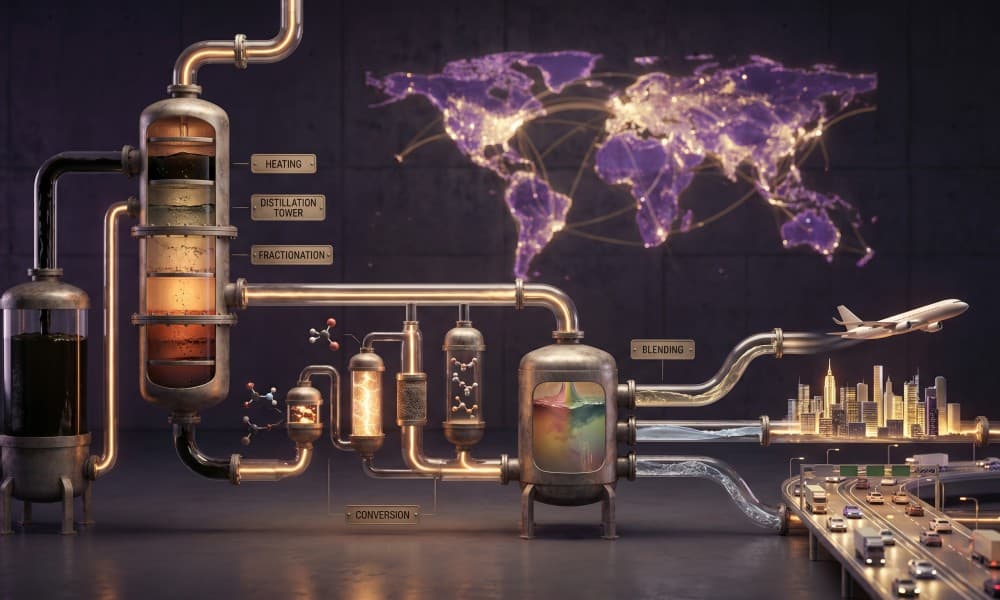
The oil refining process is divided into structured refinery process steps that convert raw crude into valuable fuels and chemical products. Each stage improves quality, removes impurities, and increases energy efficiency through a simplified approach and an optimized method designed to enhance performance and output.
True understanding begins when you look beyond the surface and see how the systems that power the world are built.
Learn Now1. Crude reception and storage
The first stage of the oil refining process begins with receiving and storing crude oil in large refinery tanks. At this stage, crude, raw materials, and feedstocks are carefully managed to ensure stable operations. Supply chain management plays a key role in maintaining steady inflow, while understanding supply chain vs logistics helps optimize movement and reduce delays within the oil refining process.
2. Pre-treatment and separation
In this stage of the oil refining process, water, salts, and acids are removed using separating and processing methods. This improves crude quality and reduces loss across operations. Cost control strategies are applied here to reduce operational expenses and increase efficiency within the oil refining process, ensuring smoother downstream operations.
3. Crude oil distillation
This stage is the heart of the oil refining process, where crude oil distillation occurs at different temperatures to separate components based on boiling points. This process produces gasoline, diesel, kerosene, and jet fuel, which are key refinery products that power global transportation. According to energy data, more than 80% of global transport fuels come from this stage of the oil refining process, showing its critical importance.
4. Conversion and upgrading
In this phase of the oil refining process, heavy molecules are converted into lighter, more valuable fuels using chemical and physical processes. This improves fuel efficiency, reduces waste, and enhances energy performance. It also supports economical production by maximizing output from each barrel of crude within the oil refining process.
5. Blending and distribution
The final stage of the oil refining process involves blending refined products to ensure stable, effective, and reliable fuel quality. Different types of fuels are produced to serve industrial and domestic demand. This stage ensures consistent supply and enhances the global value of the oil refining process.
What are refinery products and why do they matter?
What are refinery products in the oil refining process?
The oil refining process produces a wide range of refinery products that power transportation, industry, and daily life.
- Gasoline, diesel, jet fuel, and kerosene are major outputs of the oil refining process, supporting global mobility and aviation systems.
- Petrochemical substances produced through the oil refining process are used in plastics, chemicals, and industrial manufacturing.
- Edible oils such as soybean, sunflower, rapeseed, and palm oils are linked to vegetable oil refining processes, showing its industrial diversity.
- Fatty acids (FFA) extracted during processing are used in food and chemical industries, expanding the value chain of the oil refining process.
Global energy studies show that refinery products account for a significant share of total industrial energy consumption, reinforcing the importance of the oil refining process in modern economies.
How does petroleum refining shape global energy systems?
Petroleum refining is the broader industrial system that governs the oil refining process, transforming crude petroleum into usable fuels and chemical substances through physical, chemical, and thermal methods.
- Petroleum refining divides the oil refining process into upstream and downstream operations across multiple plants and locations.
- It ensures continuous production systems that keep refineries running efficiently within the oil refining process.
- Advanced refining methods reduce losses, improve energy efficiency, and enhance environmental benefits in the oil refining process.
- It simplifies complex operations and increases reliability across global refineries within the oil refining process.
Key operational challenges in the oil refining process
The oil refining process faces major challenges including rising expenses, shale oil variability, and supply chain disruptions.
- Specialized training such as the Advanced Refinery Process Yields Optimisation Training Course improves operational performance and efficiency in the oil refining process.
- Supply chain management ensures smooth crude inflow and stable refinery operations across the oil refining process.
- Cost control strategies help reduce operational expenses and improve profitability within the oil refining process.
- Efficient coordination between operations and logistics reduces energy loss and improves stability in the oil refining process.
Conclusion
The oil refining process is the backbone of global energy systems, transforming crude oil into fuels, chemicals, and essential refinery products that power today’s life. Every stage of the oil refining process affects economics, efficiency, and global supply stability.
Understanding the oil refining process helps reduce operational risks, improve decision-making, and increase efficiency in a highly competitive energy industry.
If you want deeper insights, start exploring how modern refineries optimize the oil refining process to remain competitive in global energy markets.
Posted On: June 8, 2026 at 06:21:19 PM
Last Update: June 8, 2026 at 06:21:19 PM
Refinery process steps are the structured stages used in the oil refining process to convert crude oil into usable energy. They ensure efficiency and control within petroleum refining by organizing each stage from intake to final distribution.
Crude oil distillation is a key stage in petroleum refining where crude is separated into different components based on boiling points. It is one of the most critical refinery process steps because it produces major energy outputs.
Refinery products are the final outputs of the oil refining process, including fuels and chemical materials used in daily life. These products are created through petroleum refining and structured refinery process steps.
Petroleum refining is the broader system that governs the oil refining process by converting crude into valuable energy resources. It integrates refinery process steps to ensure efficient production and high-quality output.
Refinery process steps directly control how crude is transformed into usable energy within the oil refining process. They are essential in petroleum refining to ensure consistent production of refinery products.
Articles You Can’t Miss
Handpicked content to fuel your curiosity.