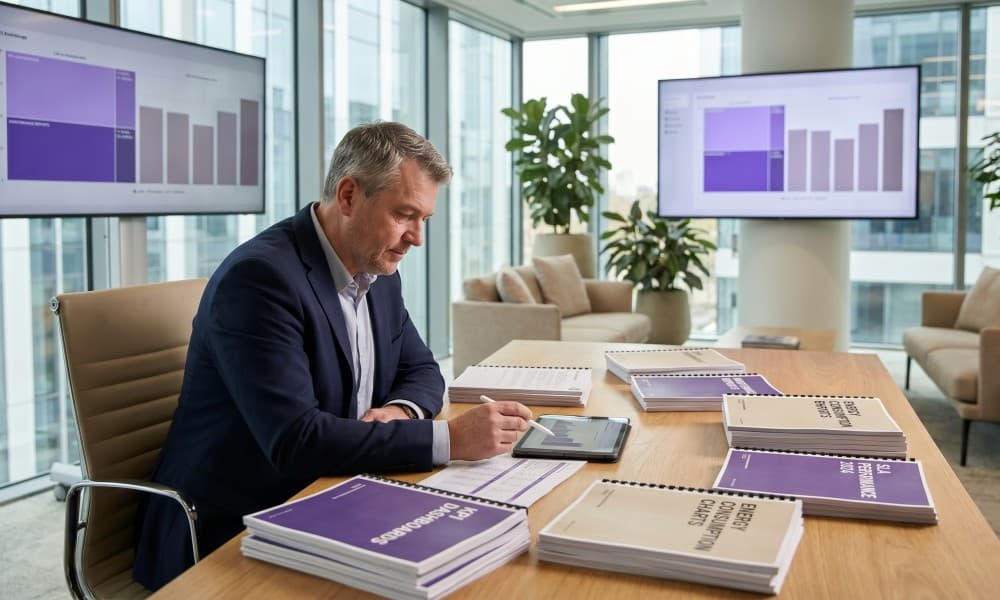
Key Facilities Management KPIs Every Facilities Manager Should Track
Poor facility performance is often difficult to diagnose because maintenance delays, rising costs, SLA failures, energy waste, and user complaints are tracked separately rather than connected through clear facilities management KPIs. In this article, you’ll learn the key facilities management KPIs every facilities manager should track, how to calculate them, and how they support better decisions on cost, compliance, asset reliability, service quality, and operational efficiency.In This Article
Quick links to sections in this article.
Facilities management KPIs are measurable indicators that show whether a building, service, asset, or team is performing as expected. They help a facility manager track maintenance, cost, compliance, energy, space, service quality, and user satisfaction so decisions are based on data rather than assumptions.
Strong management depends on knowing what is working, what is failing, and where budget is being lost. ISO 41001 defines facility management as a structured management system that supports organisational needs through monitored processes, improvement, and performance evaluation.
Why Facilities Management KPIs Matter
Facilities management KPIs give executives a clear view of operational health. They show whether assets are reliable, teams are productive, vendors meet SLA commitments, and buildings support business outcomes.
For example, a hospital in Kuwait may use downtime, response time, cleaning audit scores, and compliance findings to reduce service disruption. A commercial tower in the UAE may focus on energy use, space occupancy, tenant satisfaction, and lifecycle costs.
JLL notes that FM metrics can help organisations benchmark work orders, improve maintenance decisions, optimize energy consumption, and identify underused space.
FM Performance Indicators That Connect Operations to Business Value
The best facilities management KPIs are not just technical numbers. They connect facility operations with revenue protection, risk control, employee experience, and leadership reporting.
These indicators should be reviewed monthly, not annually. Delayed reporting hides the early sign of asset failure, rising costs, or poor contractor practices.
You cannot manage what you do not measure; clear metrics are the foundation of smart facility decisions.
Start nowCore Facilities Management KPIs to Monitor
1. Preventive Maintenance Completion Rate
This kpi shows the percent of planned maintenance tasks completed within the scheduled time. A low score means teams are reacting to breakdowns instead of preventing them.
Formula: completed preventive tasks ÷ scheduled preventive tasks × 100.
A CMMS makes this easier by linking job plans, assets, technicians, and history. Predictive maintenance research also shows that IoT, sensor data, and machine learning can improve failure prediction and reduce downtime.
2. Asset Downtime
Asset downtime measures how long essential equipment is unavailable. This includes HVAC systems, lifts, generators, pumps, access control, and critical technology.
For a hotel, downtime can reduce guest satisfaction. For a data centre, downtime can damage service reliability and revenue. Tracking downtime by asset helps managers discover whether the issue is age, poor maintenance, weak vendor support, or incorrect operation.
3. Maintenance Cost Per Square Metre
This metric compares total maintenance cost with managed space. It helps leaders compare buildings, regions, and contract models.
Cost should not be reviewed alone. A low spend may look efficient but can increase long-term costs if it delays repairs. Strong financial understanding helps teams connect FM spend to asset value, lifecycle risk, and business continuity.
For wider budgeting context, facilities leaders can strengthen decisions by linking maintenance planning to practical financial concepts used in corporate reporting.
4. SLA Compliance
SLA compliance measures whether contractors deliver the agreed service level. It may include response time, completion time, quality checks, safety documentation, and customer feedback.
This is especially important in outsourced management models. When contracts lack measurable outputs, service providers may report activity without proving value.
Leaders responsible for vendor selection can benefit from the Successful Procurement of FM Services Training Course, especially when procurement decisions affect long-term service quality.
Building Maintenance KPIs for Reliability
Building reliability depends on repeatable tracking. The most useful building maintenance KPIs are those that reveal risk before failure becomes visible to occupants.
For example, if a retail facility has frequent HVAC complaints, repeat fault rate may show that the team is treating symptoms rather than replacing worn components. That single indicator can drive a stronger repair plan.

Energy and Sustainability Metrics
Energy is one of the most visible cost and compliance areas in modern facilities. Energy use intensity, peak demand, carbon emissions, water consumption, and waste diversion are practical metrics to measure.
These facilities management KPIs matter because energy prices, ESG reporting, and building certification requirements increasingly affect board-level decisions. ISO-based systems also support audit discipline and continual improvement.
In a UAE office portfolio, tracking energy per square metre can identify which building needs recommissioning. In Kuwait, cooling demand can make HVAC efficiency a major operational priority.
Space Utilisation and Workplace Experience
Space utilisation measures how effectively a facility supports people and work. It may include desk occupancy, meeting room use, density, footfall, and department-level usage.
This metric helps managers optimize leases, cleaning schedules, security coverage, and workplace planning. A building with 55 percent average occupancy may not need more space; it may need better scheduling and zoning.
Satisfaction scores add context. If occupancy is high but complaints increase, the issue may be comfort, noise, access, or maintenance response.
Facility Reporting Metrics for Leadership
Facility reporting metrics should convert operational data into board-ready insights. Reports should show trends, learn benchmarks, risks, costs, actions, and ensure accountability.
A useful executive report includes:
- Current performance against target
- Top risks by facility
- Cost variance and explanation
- SLA results by provider
- Compliance and audit findings
- Corrective actions with owners
- Next-month priorities
Good facilities management KPIs should also show whether training, supervision, and process changes are improving performance. For example, leadership teams can compare FM training outcomes with methods used to measure leadership training effectiveness.
SLA Metrics FM Teams Should Include
SLA metrics FM teams use should be specific enough to manage supplier behaviour. General terms such as “timely service” are weak; measurable terms such as “urgent requests responded to within 30 minutes” are stronger.
Useful SLA metrics include:
- Emergency response time
- Work completion within agreed window
- Preventive maintenance adherence
- Cleaning inspection score
- Statutory compliance completion
- Helpdesk closure rate
- User complaint resolution time
These facilities management KPIs improve supplier accountability because they link service performance to evidence, not opinion.
How to Choose the Right KPI Set
Do not track every available metric. Select indicators that match risk, building type, asset criticality, and management goals.
A corporate office may prioritise satisfaction, space, energy, and service response. A manufacturing site may prioritise uptime, safety, compliance, and asset reliability.
Use these criteria:
- Is the metric linked to a business risk?
- Can the data be collected consistently?
- Does the metric trigger action?
- Can teams calculate it using clear formulas?
- Does it support cost control or service quality?
For budget discipline, FM leaders should connect KPI tracking with cost control strategies that reduce waste without damaging reliability.
Common Mistakes When Tracking Facilities Management KPIs
One common mistake is measuring activity instead of outcome. For example, “number of inspections completed” matters less than whether inspections reduce faults, complaints, or compliance gaps.
Another mistake is using benchmarks without context. A premium airport, hospital, school, and warehouse will not share the same operating model or risk profile.
A third mistake is poor data quality. If teams close work orders without accurate notes, CMMS reports become unreliable. Data governance is essential for good scoring and decision-making.
Practical Implementation Tips
Start with a small dashboard of 8 to 12 facilities management KPIs. Assign each kpi an owner, source system, target, reporting frequency, and escalation rule.
Then review results in monthly operational meetings. Use exceptions to drive action: rising costs, ageing backlog, falling satisfaction, repeat faults, or missed SLA targets.
Technology can increase visibility, but software alone will not improve performance. Managers need disciplined practices, clean data, trained teams, and clear accountability.
Conclusion
Facilities management KPIs help leaders measure reliability, efficiency, cost, compliance, space use, vendor quality, and occupant satisfaction. They turn daily facility activity into evidence for decisions.
In modern business, the value is not just operational control. The real value is better leadership: faster decisions, stronger supplier governance, lower risk, and clearer investment priorities.
Posted On: June 9, 2026 at 05:52:43 PM
Last Update: June 9, 2026 at 05:52:43 PM
The most important facilities management KPIs include preventive maintenance completion, asset downtime, SLA compliance, maintenance cost, energy use, space utilisation, audit findings, and user satisfaction.
Most facility managers should start with 8 to 12 core KPIs. This keeps reporting focused while still covering cost, service quality, compliance, and operational risk.
Operational KPIs should be reviewed monthly. Critical areas such as safety, compliance, SLA failures, and asset downtime may need weekly review.
A CMMS stores work orders, asset history, labour time, costs, and service records. It helps teams measure performance accurately and reduce manual reporting.
SLA metrics FM teams should monitor include response time, completion time, first-time fix rate, complaint resolution, preventive maintenance adherence, and contractor quality scores.
Building maintenance KPIs highlight repeat faults, downtime, backlog, and reactive work. This helps managers fix root causes before failures become expensive emergencies.
Executives should see facility reporting metrics covering cost variance, energy use, SLA compliance, audit results, user satisfaction, asset risk, and corrective actions.
Articles You Can’t Miss
Handpicked content to fuel your curiosity.