Natural Gas vs LNG: What’s the Difference?
Natural gas and LNG are closely connected energy sources, but they differ in form, storage, and transportation. This article breaks down their key differences, how LNG is produced, and why it plays a vital role in global energy supply chains.In This Article
Quick links to sections in this article.
Ever wondered how the same natural gas that powers your stove can also travel across oceans in massive ships? The LNG vs natural gas became necessary due to the large volume of natural gas, which makes it impossible to ship it in its natural condition.
Here is where the role of liquefied natural gas pops out to provide a suitable way for storing and shipping natural gas exports across oceans to keep the global supply chain flowing without any challenges or demand shortages.
Same energy in two completely different forms. So, what really separates natural gas from LNG? Let’s explore the details of LNG vs natural gas together!
What’s Natural Gas?
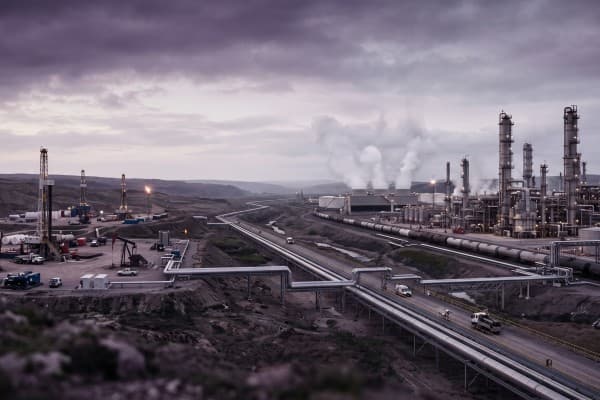
Natural gas is a fossil fuel formed beneath the Earth’s surface over millions of years. It’s widely used for heating, electricity generation, cooking, and industrial applications because it burns cleaner than many other fossil fuels and provides reliable, affordable, and efficient energy for homes and businesses.
- How Natural Gas Is Formed?
Natural gas forms when buried organic materials decompose under intense heat and pressure beneath the Earth’s surface over millions of years.
- Main Components of Natural Gas:
Natural gas mainly contains methane, along with small amounts of ethane, propane, butane, carbon dioxide, nitrogen, and water vapor.
Energy innovation is not just about powering industries, it’s about connecting the world efficiently and sustainably.
Explore NowWhat’s LNG (Liquefied Natural Gas)?
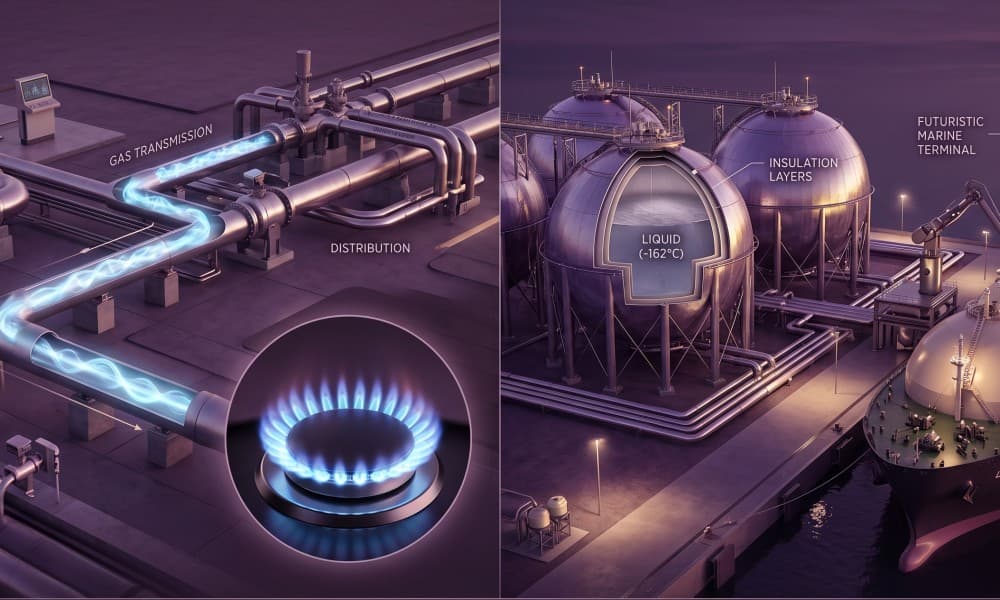
Liquefied natural gas (LNG) is natural gas cooled to approximately -162°C, to transform it into a liquefied state for easier storage and transportation. LNG takes up far less space than gaseous natural gas, making it ideal for shipping energy to regions and projects without pipeline infrastructure while maintaining the same energy properties.
- How LNG Is Made?
LNG production is done by purifying natural gas and cooling it to extremely low temperatures until it becomes a liquefied state.
- Why Is Natural Gas Liquefied?
Natural gas is liquefied to reduce its volume, making transportation and international shipping through ports or routes much easier, safer, and more efficient. Compressed volume means more shipping space and lower costs, which is a crucial financial concept for any industry.
LNG vs Natural Gas: Key Differences
Supply chain management courses will help you learn about LNG vs natural gas. The main difference is in state, uses, transportation, and more between the two gas conditions to keep supply chains and production lines working as they should be in all markets.
The Relationship Between LNG & Natural Gas:
Let’s reveal this right away! When talking LNG vs natural gas, we’re essentially talking about the same substance in different physical states. LNG is created by cooling the natural gas to extremely low temperatures, in standard terms, converting it into a liquid form that is easier to store, transport, and export over long distances where pipeline infrastructure is unavailable or impractical.
After transportation, LNG undergoes a conversion process called the regasification process that converts it back into natural gas for practical use. Once regasified, it can power homes, industries, and electricity plants with the needed energy in the same capacity just like conventional natural gas delivered through pipelines, making LNG an efficient global energy transportation solution in different supply chains and logistics.
Conclusion,
Keeping in mind all that was said, it's not LNG vs natural gas, more than a state change to transport essential energy sources on the global market without any risks to human lives, environments, and global supply chain success.
Considering the right Oil and Gas Contracts Master Class Training Course will help you gain updated knowledge and data, develop skills, and earn an accredited certificate to boost your career and reach unique growth opportunities.
Posted On: May 23, 2026 at 06:12:02 PM
Last Update: May 23, 2026 at 06:12:02 PM
Natural gas and LNG are the same energy source, but LNG is natural gas cooled into liquid form for transportation.
LNG is more cost-efficient for long-distance transport because its reduced volume simplifies storage, shipping, and international energy distribution processes.
LNG requires expensive infrastructure, specialized storage systems, high energy consumption for liquefaction, and careful handling due to extreme cold temperatures.
LNG is usually regasified before residential use, allowing households to safely receive natural gas through existing distribution networks.
LNG has higher energy density than CNG, making it more suitable for long-distance transportation and large-scale industrial applications.
Articles You Can’t Miss
Handpicked content to fuel your curiosity.