AI in Supply Chain Management: Use Cases
AI is transforming supply chain management from reactive operations into proactive decision-making. From smarter forecasting to intelligent logistics and automation, businesses are using AI to improve efficiency, reduce disruptions, and gain stronger operational control.In This Article
Quick links to sections in this article.
AI in supply chain gives companies something they have always needed but rarely had: an earlier view of what could go wrong, what could cost more, and where the next opportunity is hiding. Instead of waiting for issues to appear in reports, artificial intelligence helps supply chain management teams act before small problems become expensive disruptions.
In this article, we examine AI in supply chain and how best to utilise it in your company
Why AI in Supply Chain Is Becoming a Strategic Priority
Gartner forecasts that supply chain management software with agentic AI capabilities will grow from less than $2 billion in 2025 to $53 billion in spending by 2030. Gartner also expects 60% of enterprises using SCM software to adopt agentic AI features by 2030, compared with only 5% in 2025.
This signals a major shift. Supply chain leaders are no longer asking whether artificial intelligence belongs in operations. They are asking where it can create the fastest business value.
A useful starting point is understanding how supply chain management connects sourcing, production, logistics, and delivery. Once that foundation is clear, AI in supply chain becomes easier to apply because every use case can be tied to a real management challenge.
1. Smarter Demand Forecasting
One of the most valuable use cases of AI in supply chain is demand forecasting. Traditional forecasting often depends on past sales and human judgement. AI can go further by analysing seasonality, customer behaviour, promotions, weather patterns, regional trends, economic signals, and market disruptions.
This helps companies forecast demand more accurately and prepare supply earlier. A retailer, for example, can detect rising interest in a product before sales reports fully reflect the shift. A manufacturer can adjust production before demand spikes put pressure on capacity.
- Predictive Analytics Supply Chain Use Case
A predictive analytics supply chain model can identify where future demand may rise, which products may slow down, and which locations may need more stock. This gives planning teams better intelligence before decisions are made.
The result is not just better forecasting. It is a better supply chain management because teams can reduce waste, improve service levels, and protect revenue before a shortage or surplus appears.
2. Better Inventory Decisions
Inventory is one of the most sensitive areas in any supply chain. Too much stock ties up cash. Too little stock damages customer trust. AI in supply chain helps companies find the balance by connecting demand signals, supplier lead times, warehouse capacity, and service targets.
For example, a fashion company can use AI to decide which products should stay in regional warehouses and which should move closer to high-demand markets. A pharmaceutical company can use AI-powered alerts to prevent critical stockouts in healthcare supply chains.
This is where AI becomes commercially tempting. It does not simply show data. It helps management teams decide where money, stock, and operational attention should go.
Great supply chains are not built on speed alone, but on intelligent decisions made before problems appear.
Explore More3. AI Logistics and Route Optimization
AI logistics is reshaping how companies move goods. AI can compare routes, carrier performance, port congestion, delivery windows, customs risk, traffic, fuel cost, and customer priority.
Amazon is one of the most visible examples. The company uses AI across delivery mapping, product positioning, warehouse flow, and fulfilment decisions. Amazon’s use of AI shows how logistics can become faster when technology is built into daily operations, not added as a separate system.
For other organizations, the same idea applies on a smaller scale. A distributor can use AI in supply chain to choose between road, air, sea, or multimodal transport. The decision can be based on cost, urgency, reliability, and customer promise.
4. Disruption Monitoring Across Supply Chains
Supply chains are increasingly exposed to disruptions: supplier delays, port closures, weather events, geopolitical pressure, raw material shortages, and regulatory changes. AI in supply chain helps organizations monitor these risks before they spread.
Instead of waiting for a supplier to report a delay, AI can scan external signals and flag possible problems earlier. This is especially useful for multi-tier supply chains, where risk may begin far beyond the first supplier.
For example, a manufacturing company may receive an early warning that a key component supplier is affected by regional disruption. The company can then review alternative suppliers, adjust production, or change transport plans before operations stop.
That kind of visibility is one of the strongest arguments for AI adoption. It helps leaders move from reactive management to proactive control.
5. Supply Chain Automation Tools
Supply chain automation tools reduce repetitive work across order updates, shipment tracking, invoice checks, purchase requests, stock alerts, and exception reporting. This saves time and allows professionals to focus on higher-value decisions.
Automation is not about removing human judgement. It is about using human judgement where it matters most. A routine reorder can be automated. A high-value contract, legal issue, or supplier change should still go through human review.
Professionals who want to build stronger capability can explore career-focused supply chain learning paths before moving into advanced AI and SCM platforms.
6. Machine Learning Logistics and Warehouse Performance
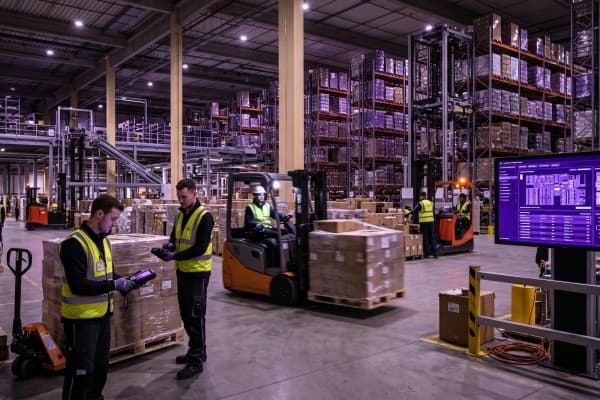
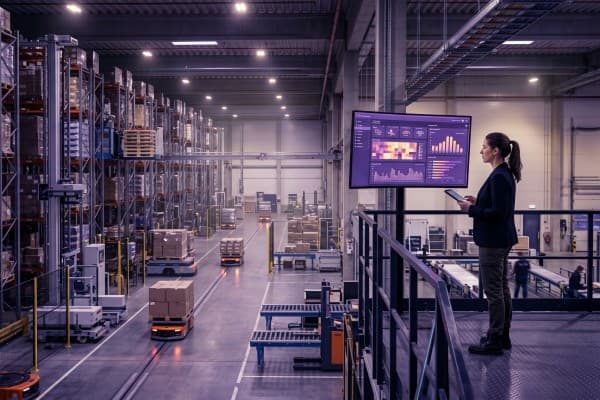
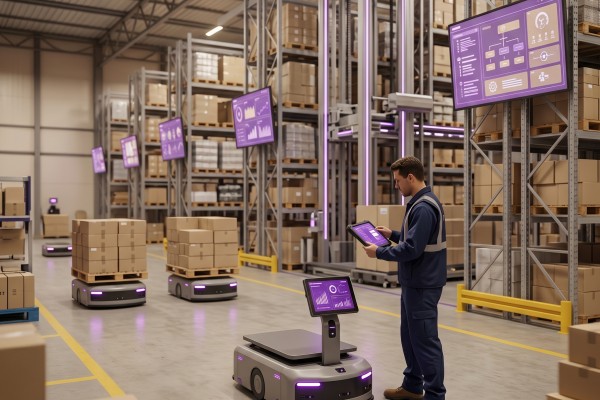
Machine learning logistics can improve warehouse layout, picking paths, labour allocation, quality checks, replenishment, and fulfilment speed. Over time, machine learning models can identify where delays happen, where errors repeat, and where capacity is underused.
This is especially important in e-commerce, retail, healthcare, and manufacturing, where speed and accuracy directly affect customer experience. A warehouse that uses AI can respond faster to order peaks, reduce manual errors, and improve workforce productivity.
Robotics may also play a role, but the best results usually come from combining people, process, and technology. AI-powered systems can support workers, guide decisions, and improve flow without removing the need for human supervision.
7. Procurement and Supplier Intelligence
AI in supply chain can improve procurement by analysing supplier performance, pricing history, contract terms, lead times, quality records, and spend patterns. This gives management teams clearer supplier intelligence.
A company may discover that it is buying similar materials from too many suppliers. It may find that one supplier has attractive prices but weak delivery performance. It may also detect unusual spending before it becomes a larger financial issue.
IBM highlights AI-supported supply chain solutions for visibility, disruption response, and smarter operations. This reflects a wider movement: procurement is becoming more data-led, more connected, and more strategic.
8. Agentic AI in SCM Platforms
Agentic AI is one of the most important developments in supply chain technology. Unlike a normal dashboard, an agentic system can help plan work, call tools, recommend actions, and trigger approved workflows.
In SCM, this could mean an AI agent notices falling stock, checks forecast demand, compares supplier lead times, prepares a replenishment recommendation, and sends it for approval. In low-risk cases, the system may execute the action automatically within defined limits.
This does not remove accountability. It increases the need for governance. Leaders must define which decisions AI can support, which actions it can automate, and where human approval is required.
Teams building long-term capability can consider Online Logistics Training Courses to connect logistics knowledge with business decision-making, technology, and supply chain management.
9. Workforce Readiness and Practical AI Skills
The potential of AI in supply chain depends on people as much as platforms. Businesses need professionals who understand planning, logistics, procurement, inventory, data, and artificial intelligence.
This is where many AI projects fail. Companies invest in technology but do not prepare the workforce to use it. Teams must know how to interpret AI outputs, challenge weak recommendations, and connect insights to real operational action.
Business teams exploring applied AI can review AI courses designed around real business applications, especially when they need to connect AI investments with measurable business outcomes.
Implementation Priorities
To make AI in supply chain successful, organizations should start with practical priorities:
- Choose one high-value supply chain problem first
- Clean data across supply, inventory, finance, and operations
- Define who approves AI-supported decisions
- Use automation where risk is low and rules are clear
- Measure results through cost, service, speed, and resilience
The strongest companies will not adopt AI because it is fashionable. They will adopt it because it helps them manage supply chains with more intelligence, speed, and control.
Conclusion
AI in supply chain is becoming a core management capability, not just a digital upgrade. It helps companies forecast demand, manage inventory, improve logistics, monitor suppliers, reduce disruptions, and make faster decisions across complex supply chains.
For business leaders, the value is practical and strategic. The companies that benefit most will use AI to strengthen visibility, build resilience, support professionals, and turn supply chain management into a sharper competitive advantage.
Posted On: May 27, 2026 at 07:42:18 PM
Last Update: May 27, 2026 at 07:48:34 PM
The main use case is improving visibility and decision-making across forecasting, inventory, logistics, procurement, and disruption response.
AI improves supply chain management by analysing patterns, detecting risks, recommending actions, and helping teams optimize operations before problems grow.
Yes. AI in supply chain can reduce excess stock, improve transport choices, prevent delays, and lower manual workload.
Yes. Smaller companies can start with forecasting, stock alerts, shipment tracking, supplier monitoring, and simple automation tools.
Agentic AI can support workflows, recommend actions, and automate approved steps inside SCM platforms while keeping governance and human review in place.
Articles You Can’t Miss
Handpicked content to fuel your curiosity.