Supply Chain Risk Management Explained
Discover why supply chain risk management has become essential for modern businesses facing global disruptions, cyber threats, and operational uncertainty. This guide explores how companies can identify risks, strengthen supply chain resilience, improve business continuity, and implement effective strategies to reduce disruptions, protect operations, and maintain long-term growth in an increasingly complex global market.In This Article
Quick links to sections in this article.
Supply chain risk management (SCRM) has become one of the most critical factors determining whether your company will thrive or falter at the first sign of trouble.
Have you ever considered what would happen if one of your key suppliers went down tomorrow? Or if your network suffered a sudden cyberattack? Or if a geopolitical crisis in the Middle East disrupted global trade? The truth is, many companies don't realize the extent of the risk until a supply chain disruption has already occurred, at which point the cost of recovery far outweighs the cost of prevention.
As organizations become increasingly reliant on complex global supply chains, the need for supply chain risk management has never been greater. According to a McKinsey & Company report, companies can expect to lose nearly 45 percent of one year’s profits over a decade due to supply chain disruptions. This guide is designed to help you understand supply chain risk management, identify risks, assess their impact, and respond to them before they escalate into a full-blown crisis.
What is supply chain risk management?
Supply chain risk management (SCRM) is a systematic process for identifying, assessing, and mitigating all potential risks that could affect the performance of your supply chain. The primary goal is to minimize the impact of any disruption to the flow of materials, products, and services within an organization.
In simpler terms, supply chain risk management helps companies identify risks before they materialize, whether internal, such as manufacturing issues, or external, such as natural disasters, market fluctuations, or cyber threats.
Why is supply chain risk management important?
The importance of supply chain risk management lies in its focus not only on managing crises but also on preventing them from occurring in the first place. When risks are identified early, it becomes easier to mitigate their impact and minimize losses.
Supply chain risk management also plays a crucial role in protecting a company's business continuity, improving visibility within complex networks, and supporting business development in a volatile and shock-prone environment.
The companies that survive disruption are not the ones with the biggest systems, but the ones prepared for uncertainty.
Stay PreparedWhat Are the Four Pillars of Supply Chain Risk Management?
The success of supply chain risk management depends on understanding four key pillars that represent most of the risks facing today's organizations.
- Supply Risks
Supply risks occur when the flow of raw materials is affected or a key supplier is disrupted, whether due to logistical problems, price increases, or inventory shortages.
These risks may seem operational, but they can affect the entire flow within the chain. Therefore, some companies rely on corporate treasury management to ensure the necessary liquidity to deal with supplier fluctuations.
- Demand Risk
This type of risk is related to customer behavior and is one of the most difficult risks to predict. A sudden change in demand can lead to a surplus of products or a significant shortage of inventory.
Here, supply chain risk management becomes an important tool for balancing supply and demand and minimizing disruptions resulting from market changes.
- Process Risks
These risks include any flaw in the internal process, such as manufacturing defects, software malfunctions, or problems with technology-driven systems.
A modern example of this is cybersecurity attacks targeting ICT systems and disrupting workflows. Therefore, companies need to understand the financial concepts related to risk management to accurately estimate potential losses.
- Environmental and Ecosystem Risks – Geopolitical Risks
These risks include natural disasters, regulatory changes, and political conflict that could affect global trade.
Crises in the Middle East or international trade disruptions are clear examples of external factors that can cause widespread supply chain disruption.
What Are the Best Risk Mitigation Supply Chain Strategies?
Successful risk mitigation of the supply chain depends on clear and consistent strategies, not just temporary reactions.
- Diversify Suppliers
Relying on a single supplier may seem operationally convenient, but it represents a significant vulnerability. If that supplier stops working for any reason, the entire supply chain could grind to a halt.
Therefore, geographically and operationally diversifying suppliers helps reduce risk, gives the organization greater resilience in the event of a supply chain disruption, and enhances the company's ability to mitigate crises more quickly.
- Increase Supply Chain Visibility
One of the biggest challenges in supply chain risk management is poor visibility within the network. When a company lacks clear data on suppliers, inventory, or material movement, decision-making becomes more difficult.
The greater the visibility within the supply chain, the easier it becomes to identify weaknesses, address vulnerabilities early, and improve response speed before a risk escalates into a full-blown crisis.
- Invest in Technology
In a technology-driven environment, intelligent systems have become an essential component of supply chain risk management. Using modern software, predictive analytics, and cybersecurity tools helps companies monitor risks in real time.
This investment not only improves assessment but also helps protect networks from cyber threats, reduces human error, and accelerates decision-making during critical times.

- Build Scenario Plans
The most successful companies don't wait for a crisis to start thinking. Instead, they proactively develop multiple scenarios to deal with global disruptions such as natural disasters, political crises, or logistics disruptions.
Having alternative plans helps the organization respond quickly and minimize downtime. This is where corporate acquisition finance (CAF) comes in, supporting rapid investment decisions when new suppliers or alternative operating assets are needed.
- Train Teams Continuously
Even the best plans won't succeed if teams aren't able to implement them. Therefore, continuous employee development is a crucial part of successful supply chain risk management practices.
Team training helps them understand risks, improve response speed, and make better decisions during crises. This is why many organizations rely on specialized programs like Supply Chain Risk Management Training Course to build more prepared and capable teams that can manage risks effectively.
How Does Supply Chain Resilience Improve Business Continuity?
Supply chain resilience refers to an organization's ability to continue operating efficiently even during crises or unexpected disruptions. When a company builds a strong supply chain, it becomes more resilient to shocks, whether related to suppliers, logistics, or even economic and political crises.
Supply chain resilience helps enhance business continuity by minimizing recovery time after any crisis and ensuring the uninterrupted flow of materials, products, and services. This not only protects revenue but also maintains the company's core mission and customer confidence in the most challenging circumstances.
Furthermore, building supply chain resilience gives organizations a clear competitive advantage. Companies that can respond quickly to sudden changes are often better able to maintain their market share, while less prepared companies may lose customers due to delays or poor service delivery. Therefore, investing in resilience has become an essential part of any modern supply chain risk management strategy.
Why Is Operational Risk Logistics a Growing Business Challenge?
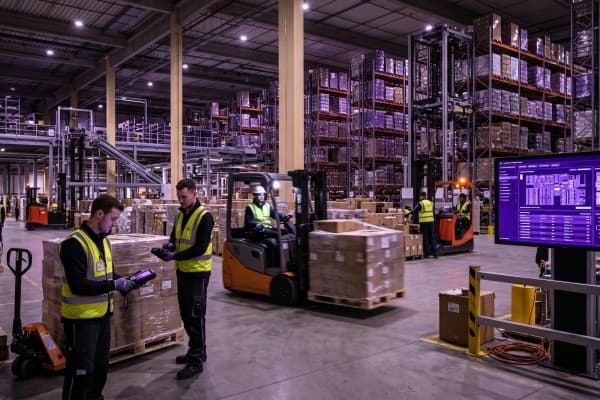
Operational risk logistics has become one of the biggest challenges facing businesses today because transportation and distribution networks are more complex and interconnected than ever before. With the expansion of global supply chains, even a small disruption at a single point can impact the entire supply chain.
Any minor delay in logistics—such as a port outage, a shortage of transport, or a customs clearance issue—can have a significant impact on customers, profits, and even company reputation, making supply chain risk management a daily necessity, not a seasonal option.
Furthermore, the challenges of operational risk logistics are no longer limited to transportation; they now include technology failures, poor visibility, rising costs, and even cyber threats targeting shipping and distribution systems. Therefore, organizations need continuous, systematic assessment of all their logistics operations to identify weaknesses, mitigate risks, and build a more resilient and sustainable operating model.
Strengthen Your Supply Chain Risk Management Today
In a world filled with uncertainty and global disruptions, ignoring supply chain risk management is no longer a safe option. Every step you take today to identify risks and mitigate their impact will save you significant losses tomorrow.
Start now: Review your supply chain weaknesses, strengthen resilience, and implement supply chain risk management as a core part of your growth strategy. Companies that prepare today... are the ones that succeed tomorrow.
Posted On: May 18, 2026 at 09:06:02 PM
Last Update: May 18, 2026 at 09:06:02 PM
Supply chain risk management is the process of identifying, assessing, and reducing risks that may disrupt supply chain operations and business continuity.
Supply chain disruption can result from supplier failures, cyberattacks, transportation delays, geopolitical conflicts, or natural disasters.
It helps companies reduce operational risks, improve resilience, and maintain stable business performance during disruptions.
Supply chain resilience is the ability of a company to adapt, recover, and continue operations during unexpected disruptions or crises.
Operational risk logistics refers to risks affecting transportation, warehousing, inventory, and distribution processes within supply chain operations.
Articles You Can’t Miss
Handpicked content to fuel your curiosity.