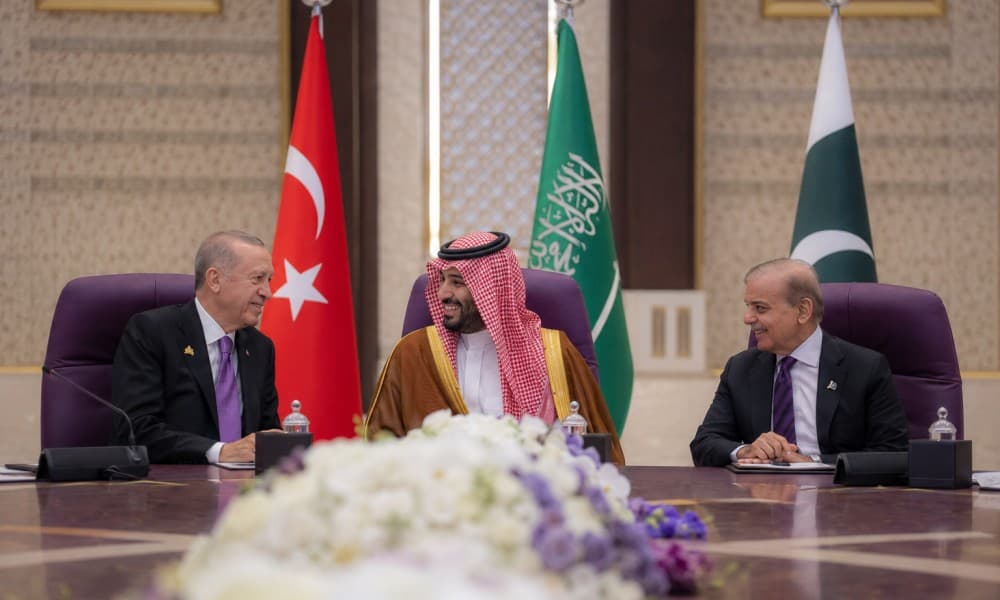
Saudi Arabia, Turkey, & Pakistan Signed the Mecca Joint Defence Agreement
A new regional defence partnership takes shape.In This News
Quick links to sections in this news.
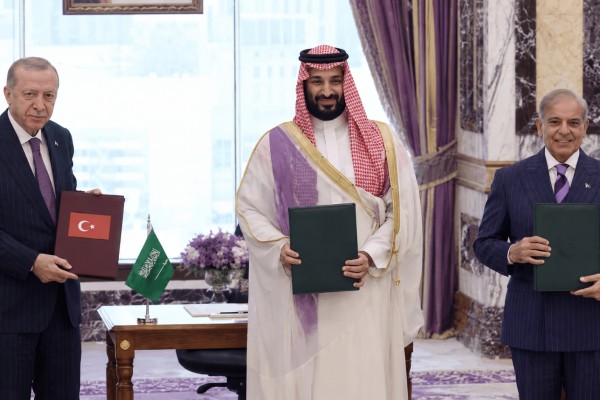
Saudi Crown Prince Mohammed bin Salman, Turkish President Recep Tayyip Erdogan, and Pakistani Prime Minister Mohammad Shehbaz Sharif signed the Mecca Joint Defence Agreement, aiming to enhance collective security and defence cooperation among the three nations.
Following the Mecca Summit on Joint Defence, a joint statement highlights a pact among the three nations to enhance security and promote regional peace.
This agreement strengthens joint deterrence against external threats, declaring that an armed attack on any member will be viewed as an attack on all, and sets a framework for broader defence cooperation.
Sunni Powers Sign Defence Pact at Mecca Summit
The summit at Al Safa Palace in Mecca included leaders Erdogan, Shehbaz Sharif, and King Salman. They discussed the enduring relations among Saudi Arabia, Turkey, and Pakistan, as well as various regional and international matters of shared interest.
Remarkably, the defence pact between Saudi Arabia, Turkey, and Pakistan establishes a new security alliance aimed at countering Iran, navigating U.S. reliability concerns, and sending a message to Israel. This alliance, which includes a NATO-style mutual defence clause, connects three influential Sunni nations aligned with the U.S.
However, analysts question the enforcement of this clause, as Pakistan and Turkey work towards resolving ongoing conflicts. Centred in Mecca, the implications of this agreement remain uncertain.
Forging New Regional Alliances as US Power Diminishes
Nearly six months into the Middle East war, the US has not achieved significant success against Iran, while Tehran maintains its control over the Strait of Hormuz and its Houthi allies interfere with shipping in the Red Sea. This situation has destabilised the regional security framework, necessitating a reassessment of long-standing beliefs about US military dominance.
Likewise, American forces are having difficulty intercepting all drones and missiles from Iran and its proxies, despite a network of US bases in the region. Political analyst Ali Shihabi indicates that American deterrence has diminished and that regional powers will need to take on more responsibility in managing the Iranian threat.
Since the onset of the war, Saudi Arabia has strengthened its relations with Turkey, Egypt, and Pakistan, previously strained partners. The four nations have collaborated in mediating the conflict, building on the historical security ties between Saudi Arabia and Pakistan, which already included a signed agreement from the previous year.
Saudi-Turkey-Pakistan Security Pact Indicates Strategic Union
Andreas Krieg from King's College London describes the complementary strengths of Saudi Arabia, Turkey, and Pakistan. Saudi Arabia possesses significant wealth but lacks military-industrial depth. Turkey has technological capabilities and manufacturing but requires market access and investment. Pakistan, with its manpower and military depth, including nuclear deterrence, faces financial and industrial challenges.
The trio cannot replace the United States, which is vital for their security. However, they are addressing shortcomings, as Washington does not restrain Israel or protect Gulf infrastructure from Iranian threats.
Saudi Arabia aims for multiple security layers, positioning itself at the heart of this new alliance, which theoretically has significant potential. Besides, the trio are unlikely to attack Iran if it repeats its strikes on Saudi Arabia, as Turkey and Pakistan view themselves as 'stabilisers' aiming to create political momentum.
Notably, Asli Aydintasbas of the Brookings Institution observes that despite a similar arrangement with Saudi Arabia, Pakistan has refrained from military action.
Further, H.A. Hellyer from the Royal United Services Institute notes that while a retaliatory strike by Pakistan and Turkey against Iran for attacks on Saudi Arabia is improbable, the pact serves as a politically symbolic message to both Iran and Israel.
New Saudi-Led Pact Offsets US-Israel Security Model
Saudi Arabia is strengthening ties with Pakistan and Turkey amidst increasing divisions in the Gulf, particularly in light of ongoing threats from Iran.
Meanwhile, the U.S. aims to expand upon the Abraham Accords to encourage a regional alliance with Israel, but a new defence pact is reportedly creating an alternative security framework that diminishes Israel's dominance, according to analysts.
Essentially, Pakistan and Turkey oppose Israel, while Saudi Arabia demands acknowledgement of Palestinian statehood before normalising relations. Hellyer notes that Washington seeks a security framework involving Israel, yet the current alliance contradicts this, revealing intentions to obstruct Iranian influence and Israeli supremacy.
Regent Centre In-House Training services are suited to your organisation's objectives, culture, and timelines. We bring measurable outcomes, fascinating presentations, and professional trainers directly to your staff, no matter where they are.
Read more news:
Posted On: August 10, 2026 at 02:31:11 PM
Last Update: August 10, 2026 at 02:31:11 PM
Articles You Can’t Miss
Handpicked content to fuel your curiosity.