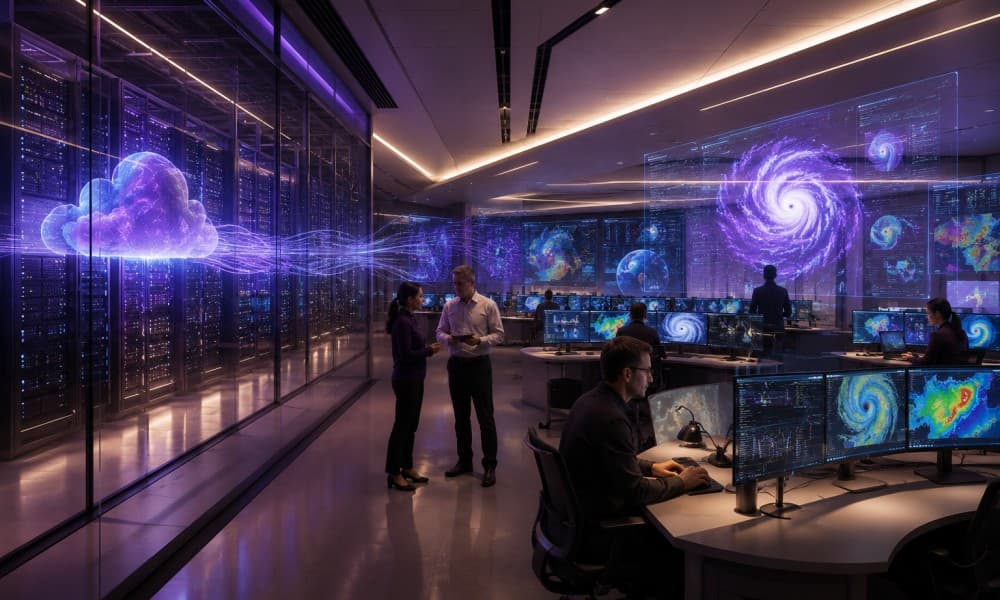
Google Cloud & NOAA Work Together to Improve Weather Forecasting
The best forecasts are built on better data, smarter technology, and continuous innovation.In This News
Quick links to sections in this news.
The National Oceanic and Atmospheric Administration (NOAA) is transitioning its high-performance supercomputing operations to the commercial cloud, enhancing its Weather and Climate Operational Supercomputing System (WCOSS) and improving weather forecast models.
The initiative seeks to create a flexible modelling system to establish NOAA as a leader in global numerical weather prediction, enhancing the accuracy and timeliness of forecasts and warnings for extreme weather events for various stakeholders.
According to NOAA Administrator Neil Jacobs, Ph.D., cloud-based high-performance computing will enhance the research-to-operations transition by removing the limitations of on-premise systems. This method will grant access to advanced chips, improve weather forecasting, and enable flexible, on-demand model development.
Advanced Computing, Accelerated Discovery
Transferring NOAA supercomputers from on-premises hardware to cloud infrastructure aims to foster a more adaptable computing environment for scientific innovation. This transition to cloud technology is expected to eliminate infrastructure bottlenecks, allowing for more nimble and flexible weather models.
- Facilitating quick upgrades and modifications in line with scientific progress.
- Increasing the system's resilience and reducing the likelihood of downtime.
- Immediately boosting processing capacity when necessary, such as during tropical hurricane season.
Through early 2027, NOAA will shift its operations—including the Global Forecast System and Global Ensemble Forecast System—to the new cloud environment. The cloud migration is expected to be finished by December 2027.
According to Ken Graham, the director of the National Weather Service, NOAA is aiming for global leadership in cloud-based numerical weather prediction. This achievement will enhance NOAA's modelling operations, allowing them to adapt to new scientific developments and strengthen their mission to protect life and property.
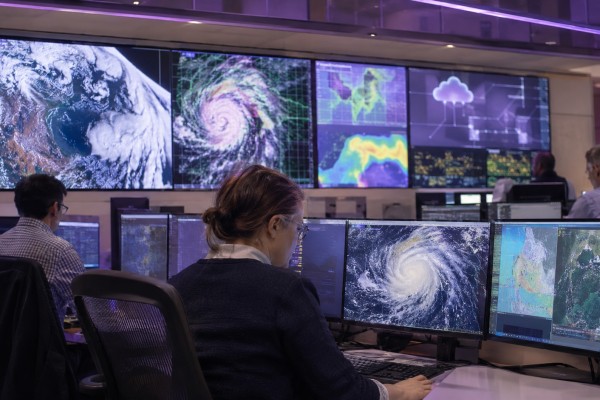
Google & a Strategic Alliance
For the WCOSS programme, Google Cloud will be the main supplier of high-performance computing infrastructure, enabling NWS's industry-leading weather forecasting and decision support capabilities. Through this collaboration, NOAA will have access to Google's experience in optimising workloads using cutting-edge technology and advancements in artificial intelligence.
Besides, Google DeepMind serves as the foundation for the new AIGFS model suite, which is NOAA's first collection of machine learning-powered weather forecast models. This is just one example of how NOAA and Google are working together on AI applications. NOAA and Google's next-generation machine learning weather prediction technologies will drastically cut the time needed to produce a worldwide forecast from hours to just a few seconds.
NOAA Takes the Lead in Cloud Adoption
NOAA is set to become one of the first operational numerical weather prediction centres globally to shift its operations to a secure, commercial cloud infrastructure.
Notably, the transition will occur in two phases: Phase 1 will establish supercomputing capabilities in the cloud, facilitating a successful transition and leveraging the cloud's flexibility. Phase 2 will focus on migrating specific weather forecast models to the cloud for operational deployment.
Overall, NOAA is transitioning its supercomputers to cloud infrastructure, building on recent contracts aimed at establishing cloud-based technology for National Weather Service (NWS) forecasters across 122 local Weather Forecast Offices and various NWS Centres nationwide.
The National Centres for Environmental Prediction's College Park, Maryland-based NWS Modelling and Development branch is responsible for establishing and administration of NOAA's weather forecasting systems and models.
Regent Centre provides specialised, industry-aligned Classroom Teachings to develop targeted knowledge for career and personal progress. The institution helps learners to achieve long-term success and professional growth by developing practical skills that are customised to market expectations.
Read more news:
Posted On: July 28, 2026 at 08:54:23 PM
Last Update: July 28, 2026 at 08:54:23 PM
Articles You Can’t Miss
Handpicked content to fuel your curiosity.