CMA CGM Kribi Becomes the First Western Ship Through Hormuz Since War Began
Even in turbulent waters, courage charts the first course.In This News
Quick links to sections in this news.
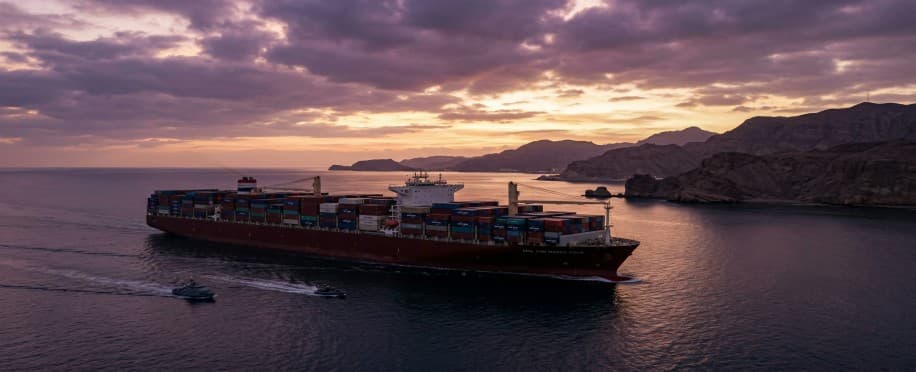
The CMA CGM Kribi, a container ship owned by the massive French shipping company CMA CGM and flying the Maltese flag, has successfully crossed the Strait of Hormuz.
Strikingly, this is the first time a ship associated with a major Western European shipping company has done so since Iran imposed stringent transit restrictions in response to the US-Israel military campaign that started on February 28.
This move followed French President Emmanuel Macron's criticism of the U.S. proposal to use force to seize the Strait of Hormuz, which he deemed impractical and hazardous, warning it may heighten the risk of Iranian missile attacks on Western forces.
CMA CGM-Linked Ship Transits Iran's Controlled Hormuz Route
Ship-tracking data indicates that the Kribi sailed into the Gulf of Oman after leaving the waters off Dubai and navigating along Iran's coastline, passing between Qeshm Island and Larak Island—the small northern corridor that Iran has designated for regulated transit.
By Friday morning, reports indicated the vessel's proximity to Muscat. The passage has commercial and diplomatic significance: CMA CGM is a French state-backed shipping business, and France is taking part in the multilateral Hormuz discussions sponsored by the United Kingdom.
A French-linked vessel crossing under what appear to be Iranian escort or clearance protocols raises the question of what preparations, if any, were taken to assist the trip.
UNCTAD: Global Trade Drops 95%
The Kribi transit, while notable as a data point, must be viewed in the context of a near-total shutdown, which UNCTAD's most recent rapid assessment has measured with pinpoint accuracy.
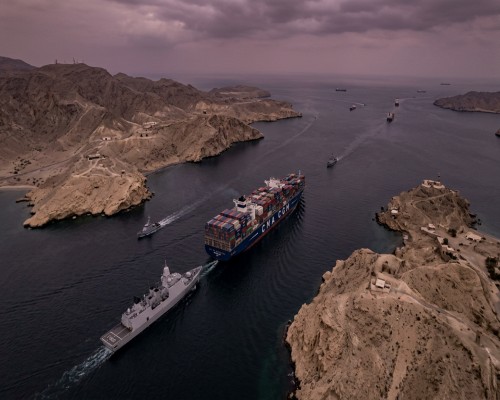
Significantly, vessel traffic in the Strait of Hormuz has decreased by more than 95%, from over 130 ships per day in February to just six ships per day in March, according to the UN trade agency.
According to UNCTAD, this collapse is a global economic shock that is upsetting energy flows, raising prices, and putting increasing pressure on developing nations that rely on Gulf energy imports. Its scope exceeds even the worst-case scenarios that shipping industry analysts had modelled at the beginning of the crisis.
In addition, as energy shortages ripple across logistical networks, UNCTAD observed that the disruption is concurrently affecting port operations, air cargo, and maritime transit.
Unlike bigger economies like India, which can manage some changes in their supply sources due to their financial strength and diplomatic ties, countries with low foreign exchange reserves and a heavy reliance on fuel imports, such as many in South Asia, Sub-Saharan Africa, and the Pacific, are experiencing significant problems with their supply chains.
LPG Tanker Pine Gas Escapes Hormuz After A 3-Week Ordeal
Individual vessel testimonies continue to highlight the human aspect of the Hormuz transit. The Indian-flagged LPG tanker Pine Gas, carrying 45,000 metric tonnes of LPG, safely crossed the Strait of Hormuz after being stalled for almost three weeks at Ruwais Port on February 27, the day before hostilities started.
Chief Officer Sohan Lal detailed the crew's experience of seeing drone and missile activity every day while waiting for clearance. During the standoff, there was visual proof of several rockets passing over the anchored vessel in the night sky.
Furthermore, the Pine Gas has since been rerouted to Visakhapatnam, rather than its original destination, to speed up delivery and relieve supply pressures in eastern India, demonstrating the operational flexibility that port operators and refiners are employing to deal with the crisis's real-time distribution issues.
The Regent Centre offers Corporate Consulting Services that handle intricate organisational difficulties by providing actionable strategies in leadership, human resources, finance, operations, and digital transformation to ensure a sustainable, successful future.
Read more news:
- Google Introduces 'AI Works for Britain' to Address the Skills Deficit
- NASA Plans to Establish a $20 Billion Lunar Base
- Perplexity's CEO Says AI will Cause 'Temporary Job Displacement' but will also Unlock a New Wave of Entrepreneurship
Posted On: April 7, 2026 at 01:36:36 PM
Last Update: June 8, 2026 at 06:34:03 PM
Articles You Can’t Miss
Handpicked content to fuel your curiosity.


