Consultative Selling: How to Sell More by Solving Customer Problems
Struggling with long sales cycles, low win rates, or pushy pitches that push clients away? Adopting consultative selling transforms your sales team from transactional vendors into trusted strategic advisors. By focusing on deep problem-solving rather than product features, modern revenue teams consistently uncover true customer needs, shorten deal cycles, and drive sustainable growth.In This Article
Quick links to sections in this article.
Modern buyers no longer respond to aggressive pitches or scripted product demos. Across fast-growing markets, forward-thinking enterprises, agile mid-market firms, and B2B leaders are overhauling their revenue models to adopt structured consultative selling methodologies for their teams. The shift is accelerated by shifting buyer behaviors, rapid digital transformation, and an urgent demand for sales representatives who act as strategic partners rather than transactional vendors.
In this guide, we break down what consultative selling truly entails, the core framework sales teams use, how to perform a deep customer needs analysis, and why adopting a consultative approach creates repeatable long-term value, higher win rates, and sustainable revenue growth across modern markets.
What Is Consultative Selling and Why Does It Matter Today?
Traditional sales tactics focus on pushing products; consultative selling focuses on solving real human and operational challenges. Instead of delivering a generic pitch, reps uncover complex friction points and co-create tailored solutions. Research shows that trusted advisors close larger deals because buyer behavior has fundamentally shifted toward value-driven relationships.
- Building Customer Relationships:
Long-term trust is the foundation of high-ticket B2B sales. Sales professionals focus on strong Customer Relationships rather than quick transactions to drive retention and recurring revenue.
- Modern Sales Techniques:
Effective reps leverage modern sales techniques that blend discovery, active listening, and problem-solving to position themselves as true strategic consultants.
Selling is no longer about pitching products; it is about uncovering problems and co-creating value.
Book ConsultationCore Principles of the Consultative Selling Framework
Mastering consultative selling requires replacing pushy tactics with genuine curiosity. The ultimate goal is understanding the customer's vision, pain points, and strategic goals before ever offering a solution.
- Developing Emotional Intelligence:
High-performing consultative professionals rely heavily on Emotional Intelligence to read implicit client cues, build rapport, and handle complex objections with empathy.
- Continuous Skill Development:
Upskilling sales teams through targeted Online Sales Training Courses ensures reps consistently execute the structured discovery process required to close complex deals.
- Active Listening and Curiosity:
Top reps prioritize asking open-ended questions and listening deeply rather than rushing to present products, ensuring the client feels genuinely heard.
Rigorous Customer Needs Analysis:
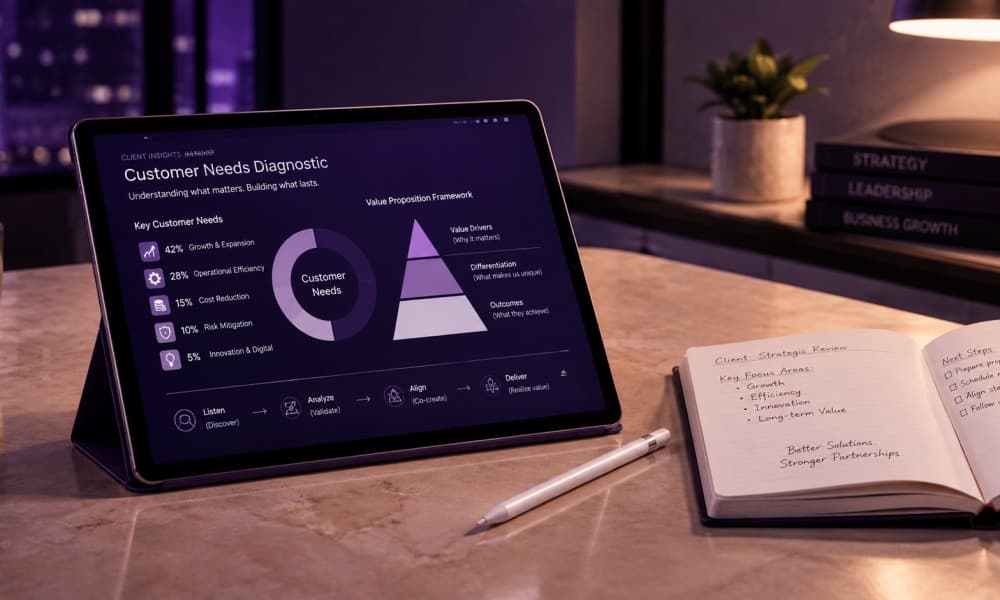
Performing a comprehensive customer needs analysis allows sales reps to diagnose underlying operational operational bottlenecks before proposing any solution.
- Value-Driven Problem Solving:
Successful consultative selling focuses on co-creating tailored outcomes that directly address executive priorities, turning transactions into lasting strategic partnerships.

How Consultative Selling Drives B2B Sales Growth
In competitive markets, adopting consultative selling directly affects your bottom line. Research by Gong indicates that discovery-driven conversations lead to a 3.5% increase in overall win rates compared to feature-heavy pitches, proving that strategic positioning beats product-centric pitching every time.
- Focusing on Relationship Selling:
Mastering relationship selling shifts the dynamic from a one-sided pitch to an ongoing strategic partnership built on mutual value.
- Strengthening Leadership Skills:
Account leaders who master key Leadership Skills can guide multi-stakeholder deals effortlessly, keeping every decision-maker aligned around clear commercial outcomes.
Standard Sales Pitch vs. Consultative Selling Approach
To clearly understand the shift, compare how traditional scripts contrast with modern consultative selling strategies:
| Feature | Traditional Pitching | Consultative Selling |
| Primary Focus | Product features & volume | Customer problem & long-term value |
| Sales Pitch | Generic, scripted presentation | Customized, diagnostic consultation |
| Buyer Dynamic | Transactional vendor | Trusted strategic advisor |
| Primary Goal | Short-term deal closing | Sustainable relationship selling & retention |
Key Benefits of Adopting a Consultative Selling Strategy
Implementing a continuous consultative selling framework transforms your sales organization from top to bottom. When reps lead with strategic questions, buyers gain absolute confidence in your strategy.
- Higher Conversion Rates:
Elevating consultative selling across your pipeline drives higher win rates because solutions are tightly based on verified buyer pain points.
- Deeper Client Alignment:
Mastering consultative selling aligns your offerings directly with executive goals, expanding deal sizes and reducing churn.
- Predictable Pipeline:
Organizations that institutionalize consultative selling enjoy predictable revenue, as reps consistently discover expansion opportunities within existing accounts.
Master Consultative Selling to Scale Your Revenue
Adopting consultative selling is no longer optional for organizations aiming to scale high-value accounts. By shifting your focus from pushing products to uncovering true customer needs, your revenue team transitions from vendor status to indispensable strategic partner.
Learn how to transform your sales organization, boost win rates, and build long-term client value by equipping your revenue team with modern consultative selling strategies today.
Posted On: September 6, 2026 at 08:07:49 PM
Last Update: September 6, 2026 at 08:07:49 PM
It is a customer-centric sales approach that focuses on asking questions, uncovering buyer pain points, and providing tailored solutions rather than aggressively pushing products.
Traditional selling prioritizes rapid product features and immediate closes, whereas consultative selling focuses on active listening, relationship building, and long-term value creation.
A thorough needs analysis allows sales reps to diagnose complex operational challenges accurately before proposing targeted strategic solutions.
Yes, targeted Online Sales Training Courses equip sales representatives with structured discovery techniques, objection-handling frameworks, and active listening skills.
By aligning solutions directly with executive business goals, consultative reps build deeper trust, leading to larger average deal sizes and higher conversion rates.
Articles You Can’t Miss
Handpicked content to fuel your curiosity.