Port of Rotterdam is Under Increasing Pressure to Expedite the Green Transition
Sustainable progress is achieved when economic growth and environmental responsibility move forward together.In This News
Quick links to sections in this news.
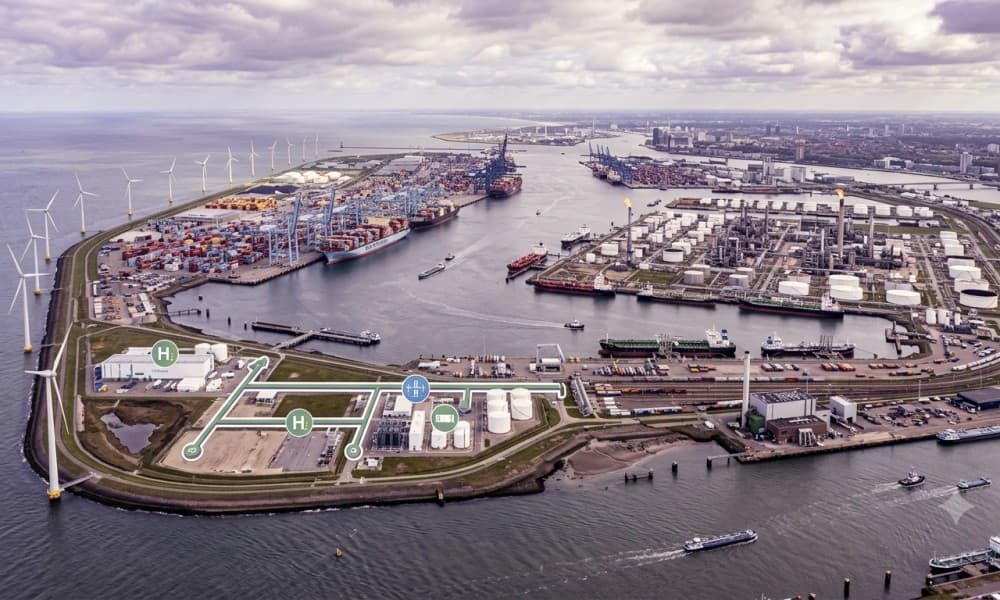
Perched on a grassy edge in the Hook of Holland, the view reveals the Port of Rotterdam, the largest goods port in Europe, located in the Netherlands' Rhine and Meuse delta, handling nearly as much cargo as all UK ports combined.
The horizon displays container stacks, bulk carriers, and cranes, indicating a significant centre for chemicals and energy. Every day, five refineries—including Shell's biggest in Europe—process enormous amounts of crude oil, and adjacent chemical plants supply factories all over the continent.
According to research by CE Delft, fossil fuels at the port produce about 600 megatonnes of CO₂ annually, far more than Schiphol Airport's emissions. This begs the question of whether a port that depends on fossil fuels can switch to a more environmentally friendly model, particularly as calls for action increase.
Lawsuit Demands Rotterdam Port to Force Faster Fossil Fuel Cuts
A lawsuit by Advocates for the Future claims the Port of Rotterdam Authority is insufficiently phasing out fossil fuels and demands a specific plan to reduce coal, oil, and gas emissions, which exceed those of many countries.
Notably, the Port's industrial cluster emits approximately 29 million tonnes of CO₂ annually, accounting for about half of the Netherlands' domestic emissions, according to Mark van Dijk, head of external relations at the Port Authority.
Moreover, the Port Authority acknowledges high emissions, equivalent to tens of thousands of return flights from Amsterdam to Los Angeles, and admits the situation is not good. It has outlined a plan to reduce its own emissions by 90% between 2019 and 2030, while also encouraging local businesses to adopt greener practices.
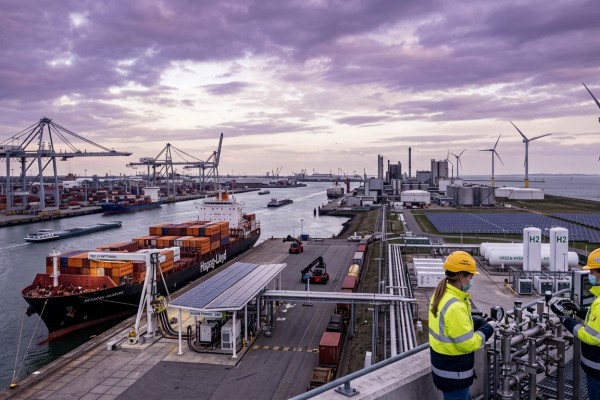
The plan involves creating a hydrogen hub for fuel testing, investing in onshore power for ships, and promoting alternatives like LNG, biofuels, and methanol. Additionally, it aims to reduce CO₂ emissions through Carbon Capture and Storage (CCS) initiatives, particularly referencing the Porthos project for offshore storage of industrial emissions.
Constraints Impede Rotterdam Port's Green Transition
Director of Advocates for the Future, Maikel van Wissen, asserts that a major port should not solely control fossil fuel logistics but also actively promote cleaner operational practices. He believes that a state-owned enterprise has a legal duty to help reduce emissions.
In the lawsuit, there is a call to phase out dependency on polluters and develop alternatives. This transition requires careful planning; otherwise, cheap, short-term solutions will prevail.
The Port of Rotterdam is actively working to shift its business model, with Oscar van Veen, the director of innovation, emphasising collaboration with polluters to expedite the phasing-out process.
Likewise, many major emitters in the Port of Rotterdam are directed by headquarters in the US or China, limiting the port's influence over them. If regulations become overly strict, companies like Shell and Unilever may relocate.
Bettina Kampman from CE Delft highlights that while the port plays a significant role in sustainability, it faces challenges such as needing physical space for new developments and limited infrastructure for electricity, which hinders the electrification of processes.
Global Rules Are Necessary for Green Shipping, Expert Says
Emeritus Professor Harry Geerlings from Erasmus University Rotterdam stresses that a single port authority cannot achieve a full transition to sustainable transport alone. He advocates for a global-level playing field, similar to the Emissions Trading System in Europe, which has previously influenced shipping behaviour by mandating cleaner fuels or scrubbers to meet EU sulphur limits.
Ultimately, China complied with international shipping regulations due to pressure from the US and European port restrictions. While incentives can drive change in corporate behaviour, regional rules have limitations. Many ships now utilise dual-fuel systems, using cleaner low-sulphur fuel in European waters and reverting to cheaper high-sulphur fuel at sea.
Geerlings asserts that while Rotterdam's port authority aspires to initiate change and is developing necessary infrastructure, it remains heavily reliant on fossil fuel industries for income. He highlights the complexity of transitioning, as the port's function as a logistics hub is essential for its existence, presenting a significant challenge.
Activists Seek a Concrete Green Plan from Rotterdam Port
Advocates for the Future demand that the Port of Rotterdam Authority, as a publicly owned entity, must create a detailed phase-out plan for fossil activities rather than simply committing to climate neutrality by 2050.
Further, Director Maikel van Wissen points out the need for a concrete plan for sustainable development. Van Dijk, sharing a taxi from the port, acknowledges that both the port and its critics aim for net zero by mid-century, but the contention lies in the pace and extent of necessary changes.
Regent Training's Online Courses can assist learners in improving their productivity and achieving their career goals while enhancing their skills and self-esteem.
Read more news:
Posted On: July 13, 2026 at 07:02:07 PM
Last Update: July 13, 2026 at 07:03:00 PM
Articles You Can’t Miss
Handpicked content to fuel your curiosity.