
Work Breakdown Structure (WBS): What It Is, How to Create It + Example
Ever felt overwhelmed by a project before it even starts? A Work Breakdown Structure (WBS) brings clarity by breaking complex projects into clear and manageable deliverables, helping teams plan smarter, control scope, and deliver results with confidence from day one.In This Article
Quick links to sections in this article.
Are you ready to meet the “What” of your project? Work breakdown structure (WBS) will help you know what should be done to achieve the needed outcomes based on the project components.
The work breakdown structure template helps engineers, project managers, students, and others to create a manageable visual hierarchical tree, learn more about project requirements, and define the entire project scope effectively.
Don’t worry, we’ll explain more! Continue reading our article and learn what a work breakdown structure means, the foundation rules, levels, steps to create a powerful WBS structure, WBS examples, impacts, and defined mistakes to avoid.
What Is a Work Breakdown Structure (WBS)?
A Work Breakdown Structure (WBS) is a visual tool that breaks a project into smaller, clearer, and manageable deliverables, not actions. It turns all project work and management deliverables into clear portions, helping teams plan, evaluate, and assign responsibilities, and control project scope more effectively from start to finish without any risks or challenges.
Work Breakdown Structure (WBS) vs Project Schedule:
Work breakdown structure and project schedule are both effective and structured tools in project management to explore. Here are the main differences between them:
WBS Levels & 100% Rule: What You Need to Know?
Learn how work breakdown structure levels and 100% rule complete each other for a better project management process.
- The 100% Rule
The 100% Rule ensures that a work breakdown structure includes the entire project scope and required elements, nothing more, nothing less. It ensures that the scope control is clear, not missing a deliverable, or facing scope creep.
Best used for: Early planning process of projects to confirm required components and types, and align defined stakeholders.
- Levels of WBS
Work breakdown structure levels break the project into progressively detailed deliverables. Typically, each level adds management clarity without adding activities.
Best used for: Assign responsibilities, estimate effort, and maintain a clear structure for projects.

Step-By-Step: How to build a WBS?
Let’s start the real work! Follow these steps to create and develop a professional work breakdown structure (WBS) seamlessly.
- Collect the Needed Documents & Requirements:
Start by gathering project charters, contracts, requirements, and stakeholder inputs. This step is the foundation to ensure your WBS is built on approved information and reflects the actual needs of the project.
- Define the Project Scope:
Keep the work breakdown structure (WBS) clearly focused on the agreed deliverables by outlining what is included and excluded in the project to provide benefits and prevent scope creep later.
- Turn Deliverables into Separate Work Stages:
Breakdown major deliverables into smaller and logical stages. Remember that each stage or phase should represent a measurable output, not an activity or timeline.
- Set the Project Levels:
Now, to the project management best work breakdown structure trick, turn deliverables into hierarchical levels, create no more than three per branch to keep the WBS detailed but still easy to follow and manage.
- Assign Responsibilities:
Link each work stage to an owner or team. This improves accountability and makes tracking the project progress much easier.
- Finalise & Review the WBS:
Invite the key stakeholders to review the WBS and confirm dependencies, completeness, and alignment. Adjust where needed, then approve it as the official work breakdown structure.
Real Word WBS Example:
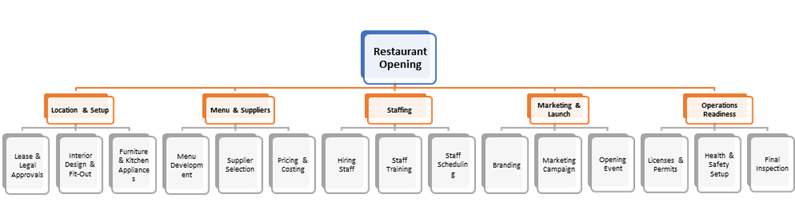
It’s time to put aside all the theoretical talk and check real-world practical examples to help you learn and explore more about WBS planning and its types and examples.
Common Mistakes of WBS Creation:
Based on project management courses that improve delivery and performance, while creating a manageable work breakdown structure, you need to do your best to avoid these complex mistakes:
- Too Many Levels:
Adding too many WBS levels to your projects, even for large projects, makes all WBS types complex and hard to read by teams. This applies to all project types, typically it’s best to limit each branch to 3 levels max.
- Activity List Instead of Deliverables:
The work breakdown structure purpose totally relies on deliverables to show the “what of projects,” not actions nor activities of projects, thus, make sure to keep it that way.
- Ignoring the Project Scope:
Let’s face it, building a WBS without a clear scope development is just a waste of time, so always keep all structured portions of a work breakdown structure in sync with the approved scope.
- Low Level of Details:
So, we’re saying that you shouldn’t include too many levels and dependencies, but that doesn’t mean not having the entire project scope included to ensure effective management and development.
How WBS Helps Control Scope & Risk?
Project management courses in London will help you learn and understand all about the work breakdown structure with detailed examples, elements, and packages.
- How WBS Controls Scope:
A WBS defines all project deliverables clearly and completely. This prevents unauthorised or unplanned changes to the project scope.
- How WBS Controls Risk:
Breaking work into smaller packages will make the risk register easier and more manageable. This allows teams to proactively plan responses and reduce surprises.
Final Thought,
A work breakdown structure (WBS) is a great visual tool that helps you learn, manage, and create better project management strategies. Components, types, and tasks are included as deliverables in the WBS to ensure the best foundation and development.
Learn all about project management types and strategies with professional training courses that offer certified certificates, advanced knowledge, and more.
Posted On: March 5, 2026 at 09:13:19 PM
Last Update: March 5, 2026 at 09:13:19 PM
A WBS is a work breakdown structure. It’s a simple way to break a project into smaller and manageable pieces and show all required deliverables.
The five steps are defining the scope, identifying deliverables, breaking them into smaller parts, organising levels, and reviewing the WBS for completeness.
The four WBS levels typically include the project, major deliverables, sub-deliverables, and work packages.
The two main types are deliverable-based WBS and phase-based WBS. Deliverable-based focuses on outputs, while phase-based follows project stages.
A WBS defines what work is included in the project. A project schedule shows when and in what order the work will be performed.
Articles You Can’t Miss
Handpicked content to fuel your curiosity.