Cybersecurity Best Practices Every Employee Should Follow
Cybersecurity is everyone’s responsibility, not just the IT department. By using strong passwords, recognising phishing attempts, protecting sensitive data, keeping devices updated, and reporting incidents quickly, employees can help reduce security risks and protect their organisation.In This Article
Quick links to sections in this article.
Cybersecurity is no longer the responsibility of the IT department alone. Every employee who uses a computer, accesses company systems, handles customer information, or communicates through email has a role to play in protecting an organisation from cyber threats. A single careless click, weak password, or improperly shared document can create serious security risks.
For this reason, organisations need practical cybersecurity best practices that employees can understand and apply every day. Developing strong cyber security awareness helps employees recognise potential threats before they become incidents. From identifying suspicious emails to protecting sensitive data and using secure passwords, simple habits can significantly strengthen an organisation's overall security posture.
Why Cybersecurity Best Practices Matter for Every Employee
Modern workplaces depend heavily on digital systems. Employees regularly use email platforms, cloud applications, collaboration tools, customer databases, financial systems, and remote-access services. Each of these technologies can become a target for cybercriminals.
The importance of cybersecurity best practices is therefore not limited to preventing technical attacks. They also help protect confidential information, maintain business continuity, reduce financial losses, and preserve customer trust.
Employees are often the first line of defence because they interact directly with emails, files, websites, applications, and external contacts. Understanding basic cyber security awareness can help employees recognise unusual behaviour and report potential incidents quickly.
Organisations can also reinforce security expectations through clear workplace policies. For example, HR policies can define employee responsibilities regarding company systems, confidential information, acceptable technology use, and reporting procedures. Clear HR policies can therefore support consistent security practices and help employees understand their responsibilities when using organisational technology.
Cybersecurity is not just about technology; it is about building daily habits that protect people, data, and organisations from evolving threats.
Stay Secure1. Develop Strong Password Security
One of the most important cybersecurity best practices is maintaining strong password security. Employees should use long, unique passwords for their work accounts and avoid reusing the same password across multiple services.
Where available, employees should also enable multi-factor authentication (MFA). MFA provides an additional layer of protection because accessing an account requires more than just a password.
Employees should never share their passwords with colleagues through email, messaging applications, or written notes. Password managers can also help users create and securely store unique passwords without needing to memorise every credential.
Good password security is particularly important for accounts with access to financial information, customer records, internal systems, or administrative tools.
2. Strengthen Phishing Awareness
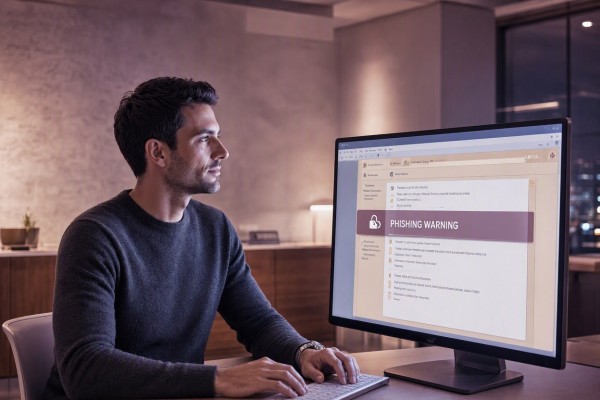
Phishing remains one of the most common ways attackers attempt to gain access to organisational systems. Cybercriminals may send emails or messages designed to look like they come from managers, colleagues, suppliers, banks, or trusted services.
Strong phishing awareness means looking carefully at unexpected requests before taking action. Employees should check the sender's address, examine links before clicking them, and be cautious about urgent requests for passwords, payments, confidential files, or account verification.
Suspicious attachments should not be opened simply because they appear to come from a familiar contact. If a message seems unusual, employees should verify the request through another trusted communication channel.
A strong cybersecurity awareness training course can help employees practise identifying realistic phishing scenarios rather than simply learning theoretical security concepts.
3. Protect Sensitive Company Data
Data protection is another essential component of effective cybersecurity best practices. Employees should understand what information is confidential and how it should be stored, transferred, and shared.
Sensitive information may include customer details, financial records, employee information, business strategies, contracts, passwords, and intellectual property. Employees should only access the information required for their role and should avoid downloading confidential files onto personal devices unless explicitly authorised.
When sending sensitive information, employees should use approved company systems rather than personal email accounts or unauthorised file-sharing services.
Data protection also involves checking recipients carefully before sending emails. A simple typing error in an email address can potentially expose confidential information to the wrong person.
4. Keep Devices and Software Updated
Software updates are not merely about receiving new features. They often include security fixes that address vulnerabilities discovered in operating systems, applications, browsers, and other software.
Employees should install approved updates promptly and restart their devices when required. They should also avoid downloading applications or browser extensions from unknown sources.
Using outdated software can create unnecessary security risks, particularly when attackers actively exploit known vulnerabilities. Keeping devices updated is therefore one of the simplest cybersecurity best practices employees can follow.
5. Be Careful When Working Remotely
Remote and hybrid work have increased the number of locations from which employees access organisational systems. Employees should avoid accessing confidential company resources through unsecured public networks whenever possible.
When working outside the office, employees should use approved VPN services and ensure that their home Wi-Fi network has a strong password and updated router firmware.
Devices should never be left unattended in public places. Employees should also lock their screens whenever they step away from their computers.
These habits are particularly important because physical access to an unlocked device can provide an attacker with an opportunity to access emails, files, applications, and company systems.
6. Use Business Systems Responsibly
Employees should understand that business systems are designed to manage and process valuable organisational information. Management information systems can include ERP, CRM, transaction processing, decision-support, and knowledge-management systems. These systems depend on accurate information and appropriate user behaviour, making management information systems an important part of everyday business operations.
Employees should only use systems for authorised business purposes and should follow the organisation's access-control procedures. They should not attempt to bypass security controls or access information outside their responsibilities.
Accurate data entry is also part of security. Incorrect or manipulated information can affect business decisions and operational processes, especially when data flows between multiple systems.
7. Avoid Unauthorised Devices and Applications
Employees sometimes use personal cloud storage, USB drives, messaging applications, or software to make work more convenient. However, these shortcuts can introduce security and privacy risks.
Before using an external application or device for company information, employees should check whether it has been approved by the organisation. Unauthorised applications may collect data, contain vulnerabilities, or lack appropriate security controls.
Similarly, unknown USB devices should not be connected to company computers. Employees should contact IT or the relevant security team if they discover an unfamiliar device.
8. Report Security Incidents Quickly
Even the strongest cybersecurity best practices cannot guarantee that every incident will be prevented. Employees may accidentally click a malicious link, send information to the wrong recipient, or notice suspicious activity on their account.
The key is to report the problem immediately rather than attempting to hide the mistake.
Early reporting can give the security team more time to disable compromised accounts, isolate affected devices, reset credentials, and investigate the incident. Employees should know exactly who to contact and which reporting channels to use.
Creating a culture where employees can report mistakes without unnecessary fear can encourage faster communication and reduce the potential impact of incidents.
9. Make Cybersecurity Awareness Part of Continuous Learning
Cybersecurity threats evolve constantly. Attackers develop new phishing techniques, exploit new vulnerabilities, and use increasingly convincing social-engineering methods. As a result, cybersecurity knowledge should not be treated as a one-time activity.
Regular refresher sessions, simulated phishing exercises, security updates, and practical training can help employees maintain strong cyber security awareness.
Continuous professional development is also valuable because technology and workplace practices change rapidly. Building a habit of continuous learning can help employees keep their knowledge relevant as new technologies, risks, and working practices emerge.
A structured cybersecurity awareness training course can provide employees with practical knowledge about phishing, password security, data protection, social engineering, safe browsing, and incident reporting.
10. Follow Cybersecurity Best Practices Every Day
The effectiveness of cybersecurity best practices depends on consistency. Employees should develop simple daily habits: verify unexpected requests, use strong passwords, enable MFA, protect sensitive information, update devices, lock screens, avoid suspicious links, and report unusual activity.
Security should become part of normal workplace behaviour rather than something employees think about only after an incident occurs.
Organisations can support this process by providing clear policies, accessible training, appropriate security tools, and regular communication. Employees, meanwhile, should take personal responsibility for following established procedures and asking questions whenever they are unsure.
Conclusion
Cybersecurity is a shared responsibility, and employees play a critical role in protecting modern organisations. Strong passwords, phishing awareness, careful data handling, secure devices, responsible system use, and fast incident reporting can significantly reduce everyday security risks.
Most importantly, effective protection requires continuous learning and consistent behaviour rather than a single security initiative. By incorporating practical cybersecurity best practices into daily work and participating in a suitable cybersecurity awareness training course, employees can become a stronger and more informed line of defence against evolving cyber threats.
Posted On: September 23, 2026 at 10:10:45 PM
Last Update: September 29, 2026 at 08:18:18 PM